

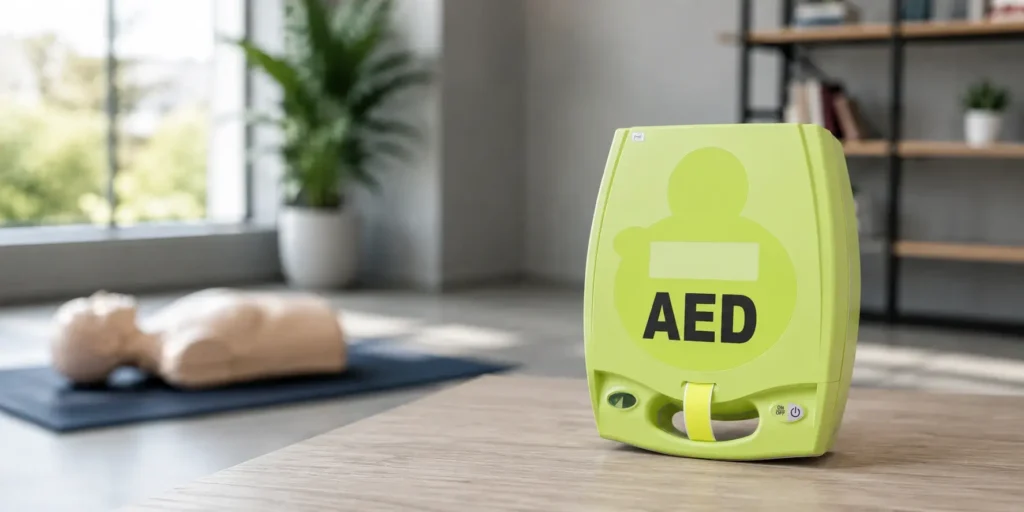
In a cardiac emergency, hesitation costs time. One of the biggest reasons people freeze is the fear of doing something wrong, or not being “qualified” to step in.
AEDs were created to remove that barrier. They are built for real life, including situations where the first person to respond is not a medical professional. The device guides the rescuer and helps ensure the right action happens fast.
This article explains who can use an AED, whether certification is required, what workplace policies typically expect, and why training still matters even when it is not legally required.
Who Can Use An AED In An Emergency?
Most people are surprised by the answer.
You generally do not need to be certified to use an AED. These devices are designed for bystanders and lay responders, and they provide step-by-step prompts that guide the rescue.
Certification may be required by an employer or a specific job role, but certification is not typically a prerequisite for using the device in an emergency. What matters most is acting quickly, calling 911, starting CPR, and following the AED’s instructions.
Why AEDs Can Be Used By Untrained People
AEDs reduce guesswork by design. They are built to guide a response even when stress is high and time is short.
A modern AED also has built-in safety checks that prevent inappropriate shocks. That is one reason public access defibrillation works in real settings like offices, schools, gyms, and public venues.
AEDs Guide You Step By Step
Once powered on, the AED tells you what to do. It prompts pad placement, instructs you to stand clear during analysis, and guides CPR timing.
The prompts are not there to replace training. They are there to support action when a trained responder is not immediately available.
The AED Decides If A Shock Is Needed
A key safety feature is automatic rhythm analysis. The AED checks the heart rhythm and determines whether a shockable rhythm is present.
This is why AEDs are not “dangerous to use” in the way people fear. The device will only advise a shock when the rhythm meets shock criteria, and it guides you through the sequence.
The key difference between an AED and a manual defibrillator is that an AED analyses the rhythm and guides the rescuer with prompts, while a manual defibrillator relies on clinical judgement and advanced training.
Certification Vs Capability: What Training Actually Adds
Knowing you are allowed to act is one thing. Feeling confident enough to act quickly is another.
Training does not exist because AEDs are complicated. Training exists because emergencies are chaotic. CPR and AED training creates the calm competence that turns intent into action.
Training Reduces Hesitation
A trained responder is more likely to start CPR immediately, delegate tasks, and apply the AED without delay. That speed is often the biggest advantage of training.
This matters even more when the AED says “no shock advised,” because that message can confuse untrained rescuers. The priority usually remains CPR until EMS arrives or the AED advises otherwise.
A “no shock advised” message means the AED did not detect a shockable rhythm, so the priority is continuing CPR and following prompts rather than waiting for a shock.
CPR Quality Is The Real Advantage
AED prompts help with defibrillation, but CPR still requires hands-on skill. Training improves compression depth, rate, and consistency, which helps maintain blood flow while the AED analyzes or charges.
Training also helps teams practice roles. Someone calls 911. Someone starts compressions. Someone retrieves the AED. A prepared team moves faster and with less confusion.
Structured scheduling options for onsite and online delivery are available through CPR, AED, And First Aid Training that can be tailored to your facility and equipment.
What OSHA Says About AEDs In The Workplace
Workplace teams often ask this question in a different way: “Does OSHA require AED training?” or “Does OSHA require AEDs?”
OSHA standards address workplace first aid and medical services in general, but OSHA does not have a single standard that universally mandates AEDs for every workplace.
Many employers still choose to implement AED programs because the benefits are clear, especially in large facilities or higher-risk environments.
Employer policy is a separate issue from bystander permission. An employee may be required by their role to maintain CPR/AED certification, while a visitor or coworker would still be able to use the AED in an emergency by following prompts.
AED Requirements By State: What Usually Changes
AED rules can differ by state and facility type. In most cases, the focus is on program readiness, meaning documented inspections, current pads and batteries, clear placement, and training for designated responders.
Building one consistent standard across all locations, then confirming any local requirements, keeps your program reliable and easier to manage.
Good Samaritan Protection And Liability Concerns
Fear of liability is common. It is also one of the biggest barriers to action.
Many jurisdictions provide legal protections for people who assist in good faith during emergencies. Details vary by state, and this is not legal advice.
The practical expectation is simple. Call 911, follow the AED prompts, and provide reasonable care. AEDs were designed to be used in public settings, and acting in good faith is widely recognized as the right response.
What To Do First If Someone Collapses
People want a clear mental script. The best response is straightforward and repeatable.
Call 911, or direct someone to call. Put the phone on speaker if you are alone. Start CPR if the person is unresponsive and not breathing normally. Then retrieve the AED as soon as possible.
When the AED arrives, turn it on and follow prompts. Continue compressions when instructed and pause only when the AED tells you to stand clear during analysis or shock delivery.
Response speed is heavily influenced by how fast the AED can be located. In large facilities, AED signage that includes cabinet identification and directional arrows reduces wasted seconds by guiding a bystander to the device without hesitation.
CPR And AED Use On Women
People ask this directly, and it matters, because fear and uncertainty can stop someone from acting.
CPR on a woman is performed the same way as CPR on a man. Concerns about discomfort or embarrassment should never delay emergency care.
Do You Remove A Woman’s Bra For CPR Or AED Pads?
AED pads must adhere to bare skin. If clothing prevents pad contact, remove or cut clothing as needed. If a bra interferes with pad placement or contact, it may need to be moved or removed quickly so pads can be applied correctly.
When possible, maintain dignity by limiting exposure to what is necessary for pad placement and covering the person after pads are placed. The priority is still speed and correct pad contact.
Can 911 Tell You Where An AED Is Located?
Sometimes they can. Sometimes they cannot.
In some communities, 911 dispatch and emergency responders can access AED registries that document AED locations. In other areas, dispatch may not have reliable AED location data available at the moment.
The practical takeaway for organizations is clear. Keep AED placement obvious, keep signage consistent, and maintain accurate location documentation for each device.
If Your Business Has An AED, Readiness Is The Standard
Buying an AED is an important step. Keeping it ready is the responsibility that follows.
Many organizations install AEDs with the best intentions, then let readiness slip quietly. The most common breakdowns include expired pads, expired batteries, missing responder supplies, inaccessible cabinets, and warning alerts that go unresolved.
An AED that is not ready is not a dependable part of your emergency response plan.
An AED that is beeping is usually signalling a readiness issue such as pads that are expired or disconnected, a low battery, or a self-test fault that needs to be corrected immediately.
Because gel and adhesive degrade over time, AED pads should be replaced after any use and before the expiration date to keep the device in a verified ready state.
A reliable program also avoids waiting for warnings, because AED batteries typically need scheduled replacement based on install date and expiration date to prevent unexpected downtime.
Most preventable failures come from missed checks, which is why AED maintenance should include routine readiness inspections and documented replacement tracking rather than relying on memory.
How Life Support Systems Supports Certification And AED Readiness
Emergency readiness is not just equipment on a wall. It is equipment that works, is easy to find, and is supported by people who know how to respond.
Life Support Systems supports organizations with equipment, on-site service, and training programs designed around real response conditions. Training can be structured for your environment, your staff roles, and your risk profile so responders know what to do and feel confident doing it.
A clean next step is a readiness review that looks at placement, signage, maintenance status, and training coverage across your location or locations.
Request an AED readiness review if you want help confirming whether your program is truly rescue-ready, and what steps will strengthen response speed and confidence.
FAQs
Do You Have To Be Qualified To Use An AED?
Formal qualification is not typically required for a bystander to use an AED. The device provides prompts and guides the rescue process.
Can You Use An AED Without Certification?
Yes. Certification is recommended for confidence and CPR skill, but AEDs are designed for use by people without training.
Can An Untrained Person Use An AED Safely?
Yes. AEDs analyze heart rhythm and only advise or deliver a shock when the device determines a shockable rhythm is present.
Does OSHA Require AED Training In The Workplace?
OSHA does not have a single standard that universally mandates AED training for all workplaces. Many employers still require training as a policy decision based on risk, role, or safety goals.
Are There AED Requirements By State?
Some states set requirements around AED programs, such as maintenance, training expectations for designated responders, or documentation. Requirements vary by state and facility type.
What Are AED Requirements For Businesses?
Requirements depend on your state, industry, and workplace risk profile. Many organizations implement AED programs as a readiness best practice and to support faster response.
How Often Do AEDs Need To Be Inspected?
Many programs perform monthly visual readiness checks and follow manufacturer guidance for deeper inspections. The goal is keeping pads and batteries within date and maintaining a clear ready status.
What Is An AED Designed To Do?
An AED analyzes the heart’s rhythm and advises or delivers a shock when the device determines a shockable rhythm is present.
Can 911 Tell You Where An AED Is Located?
Sometimes, if your community uses an AED registry that dispatch can access. Many areas do not have complete AED location data, which is why on-site signage and visibility matter.
Do You Remove A Woman’s Bra For CPR Or AED Use?
Pad placement requires bare skin contact. Remove or adjust clothing as needed so pads can adhere properly, while maintaining dignity and privacy when possible.
Last updated on 3 days ago
 Call Us
 Email Us