

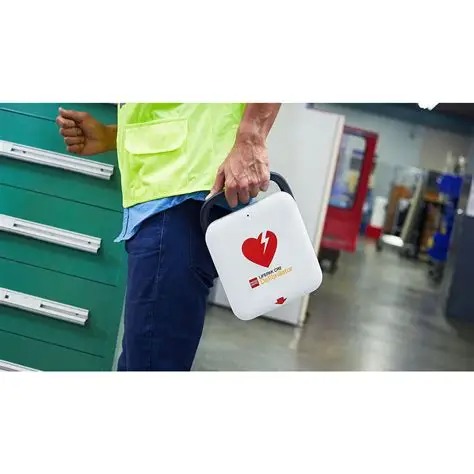
People often say “defibrillator” when they really mean “AED,” and that confusion can lead to the wrong decision. In a real emergency, what matters is not the label on the device—it’s whether the first person on scene can take the right action immediately, without hesitation.
An AED and a manual defibrillator can both deliver a lifesaving shock, but they are built for completely different users. AEDs are designed for workplaces and public settings where the first responder may be a coworker, a teacher, a coach, or a bystander. Manual defibrillators are designed for clinicians and EMS teams who interpret ECG rhythms, select energy settings, and apply advanced therapies.
This guide breaks down the differences in plain language, helps you match the device to your environment, and shows what “ready status” really means no matter which type of defibrillator you’re talking about.
AED Vs Manual Defibrillator: The Quick Answer
Most workplaces and public buildings need an AED, not a manual defibrillator, because an AED is designed to be used safely and quickly by non-medical responders. When someone collapses in cardiac arrest, the fastest correct action is to apply the AED, follow the prompts, and continue CPR until EMS arrives.
A public access AED program is built around placement and speed, and the American Heart Association’s AED implementation guidance emphasizes that early CPR and early defibrillation—delivered by people already on-site—are what close the gap before professional responders reach the patient.
Definitions First: An AED Is A Type Of Defibrillator
A “defibrillator” is the category. An AED is a specific kind of defibrillator designed for rapid use outside clinical care. That’s why many online searches that say “AED vs defibrillator” are really trying to ask, “What’s the difference between a public-use AED and the defibrillators used in hospitals and ambulances?”
Once you understand that AEDs are defibrillators built for lay response, it becomes easier to see why manual defibrillators are not typically the right choice for workplaces—even though they are powerful medical tools.
What An AED Is Designed To Do
An AED is designed to make the shock decision as safe and simple as possible. The device analyzes the rhythm and tells the user whether a shock is advised, then guides the response with step-by-step prompts that support CPR and defibrillation.
The FDA’s overview of automated external defibrillators (AEDs) explains that AEDs are intended for use by laypersons with minimal training through automated rhythm analysis and safety features that help prevent inappropriate shocks, which is exactly why they are suitable for workplaces, schools, gyms, and public spaces.
What A Manual Defibrillator Is Designed To Do
A manual defibrillator is designed for professionals who can interpret rhythms and make therapy decisions. Instead of the device telling the user “shock” or “no shock,” the operator reads the ECG, determines what rhythm they’re seeing, selects energy settings, and delivers therapy based on clinical judgment and protocol.
In practice, an automated defibrillator functions as a professional tool for advanced care—useful in EMS and hospitals—while an AED is the right tool for immediate action in public and workplace environments where trained clinicians are not the first responders.
Side-By-Side Comparison: AED Vs Manual Defibrillator
| Category | AED (Automated External Defibrillator) | Manual Defibrillator |
| Intended user | Lay responders / minimally trained staff | EMTs, paramedics, nurses, physicians |
| Rhythm decision | Device analyzes rhythm and advises shock/no shock | Operator interprets ECG rhythm and decides |
| Energy control | Preset protocols and guardrails | Operator selects energy and therapy |
| Typical setting | Workplaces, schools, gyms, public buildings | Ambulances, hospitals, monitored clinical care |
| Extra capabilities | Focused on guided defibrillation + CPR prompts | May include monitoring, pacing, cardioversion (professional use) |
The biggest difference isn’t the device’s ability to shock. It’s who the device is designed for and how the shock decision gets made.
In a workplace setting, the “best” defibrillator is the one that enables the fastest correct action. That’s why AEDs dominate public access response: they reduce decision-making burden and keep the workflow clear under stress.
Who Can Use It
AEDs are built for lay responders—people who may have basic CPR training or no training at all. They provide voice prompts, simple visuals, and automatic rhythm analysis to support action in chaotic moments.
Manual defibrillators are used by EMS, nurses, and physicians who have advanced training and are operating within clinical protocols. In those settings, manual control can reduce delays because professionals can interpret rhythms quickly and deliver therapy without waiting for automated analysis cycles.
Who Makes The “Shock” Decision
An AED makes the shock recommendation based on rhythm analysis and only allows a shock when it detects a shockable rhythm. That’s the core safety feature that makes AEDs appropriate for public settings.
A manual defibrillator requires the operator to interpret the rhythm and decide whether to shock, how much energy to deliver, and when to deliver it. That level of control is powerful in trained hands but introduces risk and hesitation in untrained hands.
Control And Capabilities
AEDs are designed around a guided workflow and preset protocols. Most provide prompts for CPR timing and rescue steps, and the user follows the device’s instructions.
Manual defibrillators allow professionals to customize therapy, including energy selection, rhythm management decisions, and advanced interventions that are not part of the public access AED workflow.
Where You’ll Typically Find Each
You’ll typically find AEDs in workplaces, schools, gyms, public venues, and community buildings because they are intended for rapid, layperson response.
You’ll typically find manual defibrillators in ambulances, hospitals, and monitored care environments where professional teams can apply advanced life support and clinical monitoring.
Manual Defibrillator Capabilities AEDs Usually Don’t Have
Manual defibrillators are designed to support advanced care after EMS arrives or in clinical settings where trained professionals manage rhythms and hemodynamics. These capabilities are the reason professional defibrillators exist—but they also explain why manual defibrillators are rarely the right choice for a workplace.
A workplace AED program should focus on early action, not advanced therapy. Your job is to bridge the gap until professional care arrives.
Synchronized Cardioversion
Manual units can support synchronized cardioversion, which is used in specific rhythm situations under professional supervision. This is not a function intended for public access AED programs, and it requires training and clinical judgment.
Transcutaneous Pacing
Some professional defibrillators can provide pacing, which is part of advanced life support response in certain scenarios. This is another example of why manual defibrillators belong with trained teams and protocols, not in general public use settings.
Advanced Monitoring And ECG Interpretation
Manual defibrillators often display ECG rhythms and may support additional monitoring functions. These features are useful for professionals who can interpret the data and apply protocol-based decisions in real time.
In contrast, AEDs are intentionally simplified. They are designed to help untrained responders deliver early defibrillation and CPR with minimal decision burden.
Why AEDs Win For Workplaces And Public Buildings
Workplaces and public buildings are defined by one reality: the first responder is usually not a clinician. Your response system must match that reality, or it will fail under pressure.
AEDs are designed to support early intervention by non-medical responders, and that is why they are the right tool for the majority of workplaces.
The First Responder Reality
In an emergency, the first person on scene is typically a coworker, staff member, or bystander. They need a clear workflow that reduces hesitation. An AED provides exactly that: open the cabinet, apply pads, follow prompts, and continue CPR.
The AHA AED implementation framework reinforces that early defibrillation depends on placement, accessibility, and a program structure that makes fast action possible, which is why AED programs focus on time-to-retrieval and clear wayfinding.
Guardrails Reduce Mistakes Under Stress
When people are stressed, they need guardrails. AEDs use automated rhythm analysis and prompting to reduce the risk of inappropriate shocks and to support correct steps in the right order.
The FDA’s automated external defibrillator guidance explains that these devices are built to guide lay responders safely, which is exactly why they’re commonly deployed where medical professionals are not immediately present.
Faster Correct Action Beats More Complexity
In public settings, speed is often more valuable than complexity. A device that is easy to use immediately can outperform a more complex device that creates hesitation or requires training most workplaces don’t maintain.
That’s why most organizations should focus on choosing the right AED, placing it correctly, and maintaining it in ready status—rather than chasing advanced features intended for clinical care.
If your organization is reviewing options, Life Support Systems’ AED equipment options are designed to match real workplace and public setting needs through consultative selection rather than one-size-fits-all recommendations.
Fully Automatic Vs Semi-Automatic AEDs
Many buyers also want to understand how AED types differ, especially when comparing devices for public-facing environments.
This distinction matters because it affects workflow under stress, even though both types are designed for layperson response.
What Changes Between The Two
A semi-automatic AED advises a shock and prompts the user to press a shock button. A fully automatic AED advises a shock and then delivers it automatically after warning prompts.
The FDA’s AED overview describes both approaches as part of public access design, where the device guides the user through a clear sequence to reduce delay and support safe action.
Which One Fits Your Facility
Facilities with trained staff often prefer semi-automatic AEDs because the shock delivery step is deliberate. Public-facing environments sometimes prefer fully automatic AEDs because the workflow is more streamlined.
In either case, outcomes depend less on the “automatic” label and more on whether the AED is visible, accessible, and supported by training and maintenance.
What Happens When EMS Arrives
A workplace AED program doesn’t replace EMS—it complements it. The AED exists to deliver early intervention while professional help is on the way, then transfer care smoothly when advanced teams arrive.
This handoff is part of a well-designed emergency response system, not a sign that your AED is “only temporary.”
AED First, Then Advanced Care
In many responses, the AED is used first because it’s immediately available. Once EMS arrives, they may continue care using advanced equipment and protocols designed for professional decision-making.
That transition is exactly why public access AED programs emphasize early action. The American Heart Association’s AED program guidance is built around the idea that early bystander defibrillation and CPR create the best window for EMS to continue care successfully.
Why Manual Defibrillators Enter The Picture
When EMS arrives, they may use professional devices that provide ECG monitoring and manual control. A manual defibrillator is designed for this phase of care, allowing trained operators to interpret rhythms and apply therapies that go beyond the automated shock/no-shock decision workflow of an AED.
For workplaces, the key takeaway is simple: your AED should be used immediately when needed, and professional care will take over when it arrives.
Buying Guidance: Which Should You Choose?
The right device is the one that matches your environment, your responders, and your responsibility.
Most organizations outside clinical care need a well-run AED program, not a manual defibrillator.
If You’re A Workplace, School, Gym, Or Venue
You need an AED program that prioritizes speed and usability. That means selecting an AED appropriate for the environment, placing it for fast access, and training staff for confident response.
A workplace program works best when training matches the device on the wall, and Life Support Systems training programs are built to align CPR/AED response skills to your actual environment and equipment, not generic assumptions.
If You’re EMS Or A Clinical Facility
Manual defibrillators may be appropriate because the staff has advanced training, protocols, and clinical oversight. Those environments can use advanced features safely and effectively.
For most workplaces, that same complexity is unnecessary and can slow response. That is why AEDs are the standard for public access preparedness.
“Ready Status” Still Matters More Than Device Type
You can choose the right device and still fail if it isn’t ready when needed. In real facilities, the most common breakdowns are simple: expired pads, depleted batteries, missing accessories, blocked cabinets, or unclear locations.
A rescue-ready program keeps the AED in a verified state, not a guessed state.
A strong readiness plan includes routine checks, replacement scheduling, and post-use reset procedures, and Life Support Systems’ AED maintenance and readiness checks are designed to keep programs consistent across one site or many locations through structured inspections, tracking, and support.
How Life Support Systems Helps
Life Support Systems supports organizations with AED equipment, on-site service, readiness tracking, and training, so the program remains rescue-ready year-round.
The difference between owning an AED and having a program is consistency: the AED is visible, accessible, maintained, and supported by responders who know what to do. That’s what emergency readiness looks like when it’s done right.
If you’re building a complete program blueprint, this guide to building an on-site AED program fits naturally into the planning process by outlining placement, training, and maintenance considerations that help organizations standardize readiness.
Clean Next Step
If you’re deciding between AED options, upgrading an older unit, or building a program across multiple sites, request an equipment fit check.
When you contact Life Support Systems with your facility type, headcount, and layout, you can get clear guidance on which AED approach fits your environment, where devices should be placed, and what maintenance routine keeps every unit in ready status.
FAQs
What is the difference between an AED and a manual defibrillator?
An AED analyzes rhythm automatically and guides the user through shock/no-shock decisions, while a manual defibrillator displays ECG rhythms and requires trained professionals to interpret rhythm and select therapy.
Is an AED the same as a defibrillator?
An AED is a type of defibrillator designed for public access and lay responders; “defibrillator” is the broader category that includes professional devices used in clinical care.
Can anyone use a manual defibrillator?
Manual defibrillators are intended for trained medical professionals with advanced life support training and protocols, not untrained workplace responders.
Do hospitals use AEDs or manual defibrillators?
Hospitals typically use professional defibrillators and monitoring systems for advanced care, while AEDs are more common in public access and workplace settings.
What does “manual defibrillation” mean?
It means delivering a shock using a professional defibrillator where the operator selects energy and makes rhythm-based therapy decisions.
What is synchronized cardioversion vs defibrillation?
Defibrillation is used for cardiac arrest with shockable rhythms, while synchronized cardioversion is a controlled shock used for certain rhythms under professional medical care.
Can manual defibrillators do pacing?
Some professional defibrillators can provide pacing as part of advanced life support, which requires training and protocols.
What’s the difference between fully automatic and semi-automatic AEDs?
Semi-automatic AEDs prompt the user to press a shock button, while fully automatic AEDs deliver the shock automatically after warning prompts when a shock is advised.
Which defibrillator should a workplace buy?
Most workplaces should buy an AED because it’s designed for lay responders, provides automated analysis and prompts, and supports immediate action before EMS arrives.
If we have nurses on-site, do we still need an AED?
In most facilities, yes—an AED supports rapid response anywhere in the building and can be used immediately while additional help is mobilized.
What maintenance do AEDs require to stay ready?
Routine checks, pad and battery tracking, accessible placement, and post-use reset steps keep AEDs in a verified ready state.
What should we do after an AED is used before putting it back on the wall?
Replace pads immediately, check battery status, confirm the AED returns to ready status, and document the reset so the unit is fully rescue-ready again.
Last updated on 1 month ago
 Call Us
 Email Us