

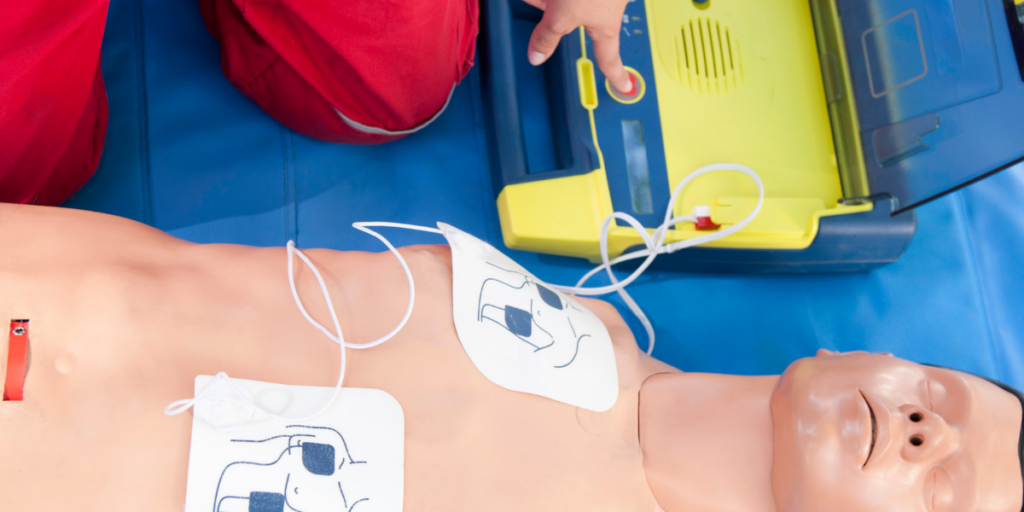
Using an AED is one of the most important actions a bystander can take during sudden cardiac arrest. The device is built to guide you with clear prompts, and it is designed for everyday people—not medical professionals.
Still, real-life emergencies aren’t always neat. The person may be wet, wearing a medication patch, or have an implanted device. You may be in a gym, a parking lot, a warehouse, or a crowded hallway. Knowing what to consider helps you act quickly and avoid mistakes that slow down care.
The most important mindset is this: safety considerations should never create hesitation. They should keep the scene safe, support good pad contact, and help the AED deliver the shock effectively if it advises one.
The 30-Second Priority Order
When someone collapses and is unresponsive, the goal is to start life-saving actions immediately. You do not need perfect conditions to begin. You need a safe scene, a clear plan, and fast follow-through.
Here is the priority order that works in nearly every situation. If you remember nothing else, remember this sequence and follow the AED’s prompts.
Scene Safety Comes First
Make sure you and others are not in immediate danger. Look for water hazards, traffic, electrical risks, or flammable vapors. If the scene is unsafe, move the person only as much as needed to create safety and access.
Confirm Cardiac Arrest And Start CPR
Check responsiveness and breathing. If the person is not responsive and not breathing normally, call emergency services and start CPR right away. If another person is present, have them retrieve the AED immediately.
Turn On The AED And Follow Prompts
As soon as the AED arrives, turn it on. Expose the chest, apply the pads, and follow the voice instructions. The device will tell you when to stop CPR and when it is analyzing.
Clear The Patient During Analysis And Shock
This is critical. No one should touch the person when the AED says it is analyzing or delivering a shock. Keeping hands off prevents interference and protects bystanders from accidental contact.
Scene Safety Considerations Before Pads Go On
Many “special considerations” are really scene safety issues. The key is to make a quick decision, take a simple action, and keep moving forward with CPR and AED use.
You don’t need to solve every problem perfectly. You just need to remove the biggest hazards and keep the response on track.
Water, Sweat, Snow, And Rain
If the person is in water, move them out of the water before using the AED. You do not need to make the person completely dry from head to toe. You only need to dry the chest area so pads can stick properly.
In rain or sweat, a quick towel wipe across the pad placement areas is usually enough. The AED is built to guide the process, but pad adhesion matters, so focus on the chest.
Flammable Or Combustible Environments
Avoid delivering a shock where flammable gases or vapors may be present. Common examples include fuel spills, certain industrial vapors, or environments where aerosolized chemicals could ignite.
If you can move the person a short distance to a safer area, do so while keeping CPR moving. If you cannot move, reduce immediate risk as best you can and follow the AED prompts without delay.
Metal Surfaces, Bleachers, And Tight Spaces
People often worry about using an AED on a metal surface. In many real-world situations, metal surfaces are unavoidable, such as bleachers or industrial platforms.
The practical goal is to ensure the pads stick to the chest and that no one is touching the patient during analysis and shock. Avoid placing pads in a way that they contact metal directly. If you can move the person to a more stable surface without significant delay, do it. If not, proceed and focus on “clear the patient.”
Chest Prep That Improves Pad Contact
Good pad contact is what allows the AED to analyze the heart rhythm and deliver therapy if needed. Chest prep should be fast and simple.
You’re not trying to make the person “perfect.” You’re making the pad placement area workable and reliable.
Clothing, Bras, And Moisture
Pads must go on bare skin. Cut or remove clothing quickly to expose the chest. In public settings, you can preserve dignity by covering areas that are not involved in pad placement, but don’t let privacy delays slow down the AED.
If the person is wearing a bra, remove or move it as needed to place pads correctly. Underwire can interfere with pad placement if it sits directly under where the pad needs to go. The AED pad diagrams are your guide.
Chest Hair
Chest hair is a common reason pads fail to adhere properly. Many AED responder kits include a razor for this reason.
If the hair is thick in the pad placement areas, shave quickly where the pads will go. If shaving is taking too long or the situation is chaotic, place the pads firmly and follow AED prompts. Speed matters, and the device will guide you if it detects a contact problem.
Jewelry And Piercings
Most jewelry does not need to be removed. Don’t waste time taking off necklaces, rings, or earrings.
If a piercing is exactly where the pad needs to go, place the pad slightly away from the metal while keeping the general pad placement pattern. The priority is good pad contact and correct spacing, not perfection.
Special Patient Considerations
Certain patient situations require small adjustments in pad placement or quick removal of an obstacle. These are the scenarios people ask about most often, and they are the ones that can cause hesitation.
The best approach is to recognize the situation, make the adjustment, and keep the response moving.
Pacemakers And Implantable Defibrillators
Some people have implanted devices under the skin, often near the upper chest. You may see a small bump, a scar, or a visible outline under the skin.
Do not place an AED pad directly over an implanted pacemaker or defibrillator. Instead, place the pad slightly to the side so it is not directly on top of the device. You do not need to “hunt” for the implant. If you notice it, adjust the pad position and proceed.
Medication Patches
Medication patches can interfere with pad adhesion and can be unsafe if a shock is delivered through the patch area. If you see a patch where a pad would go, remove it.
Use gloves if available, remove the patch, and wipe the area quickly so the pad can adhere. Then place pads as directed. This is a fast step, and it prevents pad failure and unnecessary risk.
Pregnancy
People sometimes hesitate because they are worried about pregnancy. In cardiac arrest, the priority is restoring circulation. Using an AED is appropriate when the person is unresponsive and not breathing normally.
Pad placement generally stays the same. Follow the AED prompts, continue CPR, and focus on fast, effective response. The best chance for the mother and baby is immediate care.
Children And Pediatric Pad Use
If the person is a child, pediatric pads or a child mode should be used when available. Many facilities that serve children—schools, childcare centers, youth sports, family venues—plan for pediatric readiness as part of their AED program.
If pediatric pads are not available, adult pads can be used, but pad placement may need to change so pads do not overlap. A common approach is one pad on the chest and one pad on the back. The diagrams on the pads and AED prompts should guide you.
Larger Bodies And Pad Spacing
With larger bodies, the key is pad adhesion and spacing. Make sure pads are firmly attached and not overlapping. If you need to adjust slightly to avoid overlap, do so while maintaining the general front-side placement pattern shown on the pads.
Avoid placing pads over thick clothing or areas that prevent full contact. If the chest is moist, dry it quickly and proceed.
What Not To Do When Using An AED
Many delays happen because rescuers try to make everything perfect. The best AED response is simple, fast, and guided by the device.
Avoid these common mistakes:
Don’t touch the patient during analysis or shock. This is one of the most important safety rules, and it prevents interference with rhythm detection.
Don’t spend long troubleshooting an AED that isn’t showing ready status in the middle of an emergency. Continue CPR and send someone to get another AED if needed. The AED is a tool, not the only tool.
Don’t place pads over clothing, over a medication patch, or directly over an implanted device. Small adjustments prevent pad faults and improve effectiveness.
Don’t delay CPR while preparing the AED. CPR should begin immediately and continue until the AED tells you to stop for analysis.
What To Keep With The AED So Considerations Don’t Become Delays
Many “special considerations” become a problem only because the right items aren’t available. A simple responder kit helps you respond quickly without searching for supplies.
Most facilities keep basic items such as gloves, scissors for cutting clothing, a razor for chest hair, and a towel or wipes to dry the chest area. If children are regularly present, pediatric capability should be part of the station plan.
The most important goal is that the AED station is complete, accessible, and consistently maintained. In an emergency, the responder should not need to leave the AED to find basic supplies.
After AED Use: Return The Unit To Ready Status
An AED program doesn’t end when the emergency ends. After any use, the AED must be restored to a verified ready state as quickly as possible.
Replace the pads immediately after a rescue. Check the battery and confirm the readiness indicator returns to “ready.” Restock any items used from the responder kit. Document the event and schedule a follow-up inspection.
This “return-to-ready” step protects the next person who may need the device. It also strengthens compliance and reduces liability by ensuring continuous readiness.
How Life Support Systems Helps Organizations Respond Confidently
Using an AED successfully depends on more than the moment itself. It depends on whether the AED is findable, accessible, and in a verified ready status before an emergency happens.
Life Support Systems supports complete emergency readiness programs, including AED selection, placement guidance, on-site service and inspections, replacement planning for batteries and pads, and training aligned to your environment. The goal is simple: when an emergency happens, your team can act immediately with equipment that is ready to perform.
If your organization wants a stronger readiness standard across one facility or multiple locations, it starts with a program that is maintained, tracked, and supported—not just installed.
FAQs
What Are The Most Important Safety Considerations When Using An AED?
Make sure the scene is safe, start CPR immediately, and ensure no one touches the person during analysis or shock delivery. Follow the AED prompts and keep the response moving.
Can You Use An AED On Someone Who Is Wet Or In The Rain?
If the person is in water, move them out of the water first. In rain or sweat, dry the chest area where pads will be placed so they stick properly. You do not need the entire body completely dry.
Is It Safe To Use An AED On A Metal Surface Or Bleachers?
AEDs can be used in these situations. Focus on good pad adhesion and make sure no one is touching the patient during analysis and shock. Avoid having pads contact metal directly.
What Should You Do If The Patient Has A Pacemaker Or ICD?
Do not place a pad directly over the implanted device. Place the pad slightly to the side and proceed with AED prompts.
Do You Need To Remove Medication Patches Before Using An AED?
Yes, if a patch is in the pad placement area. Remove the patch with gloves if available, wipe the area quickly, and apply pads to bare skin.
Do You Have To Remove Jewelry Or Piercings For AED Pad Placement?
Usually no. Do not delay AED use for jewelry removal. If a piercing is directly under pad placement, place the pad slightly away while keeping correct spacing.
Should You Remove A Bra Before Applying AED Pads?
Pads must go on bare skin. Remove or move clothing and bra material as needed to place pads correctly, especially if the underwire interferes with pad placement.
Can You Use An AED On A Pregnant Person?
Yes. If the person is unresponsive and not breathing normally, use the AED and follow prompts. Restoring circulation quickly is the priority.
What If You Don’t Have Pediatric Pads For A Child?
Use the AED with adult pads, but avoid pad overlap by placing one pad on the chest and one on the back if needed. Follow the AED prompts and pad diagrams.
What If The AED Says “Check Pads” Or Doesn’t Show Ready Status?
Recheck pad connections and ensure pads are placed on bare, dry skin. If the device still won’t function, continue CPR and send someone to retrieve another AED while emergency services are on the way.
How Do You Keep Bystanders Safe During Shock Delivery?
Announce “Clear,” ensure no one is touching the patient, and keep hands off until the AED confirms it is safe to resume CPR.
What Should You Do After Using An AED In An Emergency?
Replace the pads, check the battery, confirm the AED returns to ready status, restock the responder kit, and document the incident so the device remains rescue-ready.
Last updated on 1 month ago
 Call Us
 Email Us