

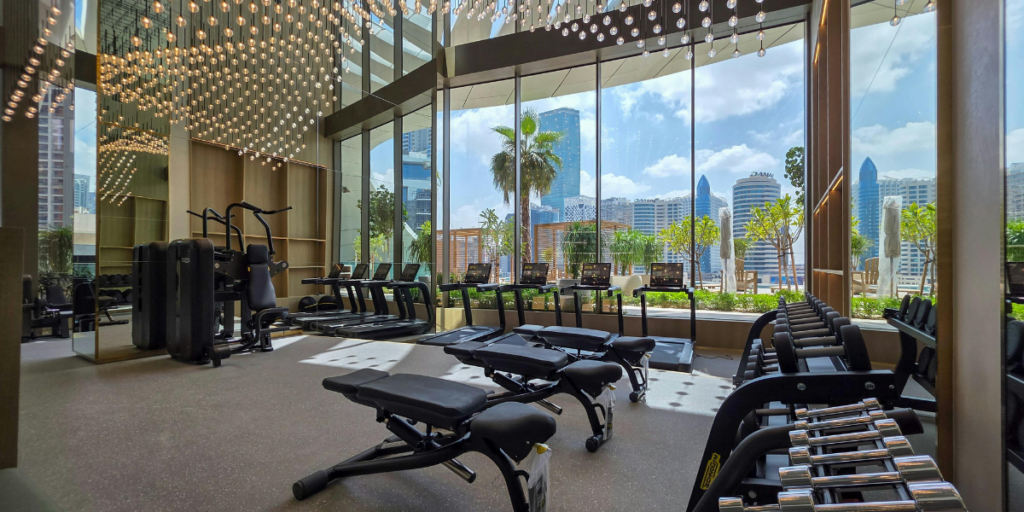
Exercise is one of the best things a person can do for their heart. It’s also, paradoxically, one of the few activities that transiently increases the risk of sudden cardiac arrest, particularly for people with underlying conditions they may not know about. Research published in Circulation by the AHA found that the relative risk of cardiac arrest is greater during exercise than at rest across all fitness levels, though the overall lifetime risk decreases substantially with regular activity.
That paradox sits at the center of every gym’s safety responsibility. The people in your facility are doing the right thing by exercising. But the nature of what they’re doing, elevating heart rate, increasing myocardial demand, pushing through fatigue, means cardiac emergencies are more likely to happen in a gym than in most other commercial settings. An American College of Cardiology study found that 77 percent of sudden cardiac arrests at exercise facilities occurred during the workout itself, and survival rates at fitness centers with AEDs reached 56 percent, significantly higher than the 34 percent survival rate at facilities without exercise programs.
This is why nearly 20 states now require gyms and health clubs to have AEDs on-site by law. And it’s why AED service requirements for fitness facilities go beyond simply buying a device, they encompass maintenance, training, placement, documentation, and legal compliance that must be sustained for the life of the device.
Which States Require AEDs in Gyms?
There is no federal law requiring AEDs in fitness centers. OSHA recommends AED programs in workplaces but does not mandate them for most private-sector businesses. The requirements come at the state level, and they vary significantly.
States with explicit AED mandates for gyms and health clubs include:
- California: Health studios must have at least one AED on-site with trained personnel available during staffed operating hours (Health & Safety Code § 104113). California also requires 90-day inspections and biannual testing.
- New York: Health clubs must have AEDs on-site, accessible to staff, members, and guests, with at least one CPR/AED-certified employee or volunteer present during operating hours (General Business Law § 627-A).
- Illinois: Physical fitness facilities with 100 or more members must have an AED and at least one trained staff member on-site during business hours (410 ILCS 4/15).
- Massachusetts: Health clubs are required to have AEDs on-site.
- Rhode Island, Arkansas, Louisiana, New Jersey, and Washington also have gym-specific AED requirements, each with varying details around staffing, training, and maintenance.
Even in states without explicit mandates, AED placement in fitness facilities is increasingly considered the industry standard of care. Courts have held fitness facilities to a higher duty of care regarding cardiac emergency preparedness, and the absence of an AED after a member’s cardiac arrest creates significant legal exposure. Good Samaritan protections—available in nearly every state—are typically conditioned on maintaining a compliant program, including device maintenance, trained staff, and documentation.
What “AED Service Requirements” Actually Means
“AED service requirements” is a term that covers everything you need to do—beyond the initial purchase—to keep your AED program compliant, functional, and legally defensible. It breaks down into five areas.
1. Monthly Inspections
The AHA recommends monthly visual inspections of every AED. Many states require documented monthly or quarterly checks, and California’s 90-day inspection mandate is among the most prescriptive. A monthly inspection takes two to three minutes per device and should cover the readiness indicator (green light, checkmark, or “OK” status), pad expiration dates, battery expiration dates, packaging integrity (no tears, punctures, or moisture damage), cabinet accessibility and signage, and completeness of the response kit (gloves, scissors, razor, barrier mask).
One important caveat: a green readiness indicator means the device passed its electronic self-test, but self-tests cannot assess gel integrity or adhesive quality in the pads. That’s why the manual date check and visual packaging inspection remain essential even when the device shows “ready.”
Best practice is to pair these monthly visual inspections with a thorough professional AED check twice each year.
2. Consumable Replacement
AED pads and batteries have finite shelf lives that vary by manufacturer. Pads typically last two to five years; batteries range from four to seven years. In a gym environment, storage conditions matter: a device mounted near a pool, in a humid locker room, or near an exterior door with temperature swings can degrade pads faster than one in a climate-controlled hallway.
Proactive replacement—ordering 60 to 90 days before the printed expiration date—prevents the scenario where a pad expires on a Tuesday and the replacement doesn’t arrive until next week. A five-year study of over 23,000 publicly installed AEDs found that expired electrode pads were the single leading cause of AED readiness failures.
3. Staff Training and Certification
Most state AED laws for gyms require at least one trained staff member present during operating hours. “Trained” means holding a current CPR/AED certification—typically through the AHA HeartSaver or American Red Cross First Aid/CPR/AED courses. Certifications expire every two years, so tracking renewal dates is an ongoing responsibility.
For gyms, staff scheduling adds a layer of complexity. If your only certified employee calls in sick, your facility may not be in compliance that day. The solution is to certify multiple staff members across shifts—enough that at least one trained person is always present during operating hours. The AHA recommends refresher training annually, even within the two-year certification window, because skills decay faster than credentials expire.
An important detail for gym owners: fully online CPR/AED courses do not meet OSHA’s recommendation for hands-on skills evaluation. If you’re training staff for compliance, use blended or in-person courses that include a practical skills session with a certified instructor.
4. Documentation and Compliance Records
A well-maintained AED program has a paper trail—or a digital one. Your compliance file should include signed and dated inspection logs for every device (monthly at minimum), current pad and battery expiration dates, staff training certificates with expiration dates, medical director agreement (if required by your state), AED registration confirmation with local EMS (if required), and records of any use events and post-incident restocking.
This documentation isn’t just administrative overhead. It’s your evidence of due diligence. AED program compliance experts have noted that when an AED fails during a cardiac arrest because of neglected maintenance, the resulting legal claim is far easier to pursue—because the failure is documentable, identifiable, and directly tied to the outcome.
5. Post-Use Restocking
AED pads are single-use. If the device is used during a real emergency—or if pads are opened during a drill—the AED must be restocked and returned to a verified “ready” state before it goes back into service. This means having spare pads on hand or an emergency resupply process fast enough to avoid any gap in coverage.
For a gym, this matters more than for a quiet corporate office. Your facility has people exercising every day. A device that was used on Monday and hasn’t been restocked by Wednesday is a device that doesn’t exist during Wednesday’s emergencies.
Placement: Where the AED Lives in Your Facility
The general standard is that any person in the facility should be able to reach an AED within a three-minute walk. For large, multi-floor, or multi-room facilities, this may require more than one device.
High-priority locations for gyms:
The main fitness floor. This is where the most intense physical activity happens and where cardiac events are most likely. Mount the AED on the wall in a visible cabinet with universally recognized AED signage. Don’t put it behind the front desk where members can’t access it after hours in a 24-hour facility.
The cardio area. Treadmills, ellipticals, rowing machines, and stationary bikes all drive sustained elevated heart rates. If your cardio area is separated from the main floor by more than a 90-second walk, consider a second device.
Group fitness and studio rooms. High-intensity interval training, spin classes, and boot camp-style workouts push participants harder than self-directed exercise. If the studio is across the building from the nearest AED, response time math may not work.
The pool or aquatic area. If your facility has a pool, the AED near it needs to be positioned so a wet responder doesn’t have to travel far. The device should be accessible from the deck. Remember that water and AEDs require specific precautions: the person must be moved out of standing water before pads are applied.
Outdoor training areas or courts. Basketball, tennis, and outdoor functional training areas need coverage. Outdoor storage requires a weatherproof cabinet that keeps the device within its manufacturer-specified temperature range.
24-hour and unstaffed facilities. If your gym operates during hours when no staff is present, your AED program needs to account for that. The device must be accessible to members, signage must clearly explain how to use it, and your emergency response plan should include instructions for calling 911 and beginning CPR. Fully automatic AEDs (which deliver the shock without a button press) may be worth considering for unstaffed environments, since they remove one decision point from a responder who may be entirely untrained.
The Liability Picture for Gym Owners
The legal landscape around AEDs in fitness facilities has shifted meaningfully in the last decade. Several points are worth understanding.
Having an AED is increasingly the standard of care. Even in states without explicit mandates, courts have recognized that fitness facilities have a heightened duty to prepare for cardiac emergencies given the inherently elevated risk of exercise. A facility that lacks an AED after a member’s death may face a more difficult legal position than one that had a device and used it in good faith.
Good Samaritan protections exist but are conditional. Nearly every state provides liability protection for people and organizations that use an AED in good faith. But those protections are typically tied to proper maintenance, trained staff, and documented compliance. A gym with an AED program that has lapsed—expired pads, no inspection records, untrained staff—may not be covered.
Waivers don’t replace AED programs. A member waiver can protect against certain claims, but a waiver that attempts to absolve a gym of responsibility for failing to maintain life-safety equipment is unlikely to hold up. AED readiness is a risk management issue that exists independent of what members sign.
Medical director oversight may be required. AEDs are FDA-classified Class III medical devices that require a physician’s prescription for purchase. Many states also require a medical director—a licensed physician who reviews and signs off on the AED program, including protocols, training, and post-event review. An AED service provider can often coordinate this oversight on your behalf.
When To Work With an AED Service Provider
A single-location gym with one AED and a small staff can potentially manage its own program. But as complexity increases—multiple devices, multiple locations, high staff turnover, 24-hour operations, state-specific compliance requirements—the risk of something slipping through the cracks grows fast.
Professional AED service providers manage inspections and documentation on a structured schedule, coordinate proactive pad and battery replacement before expiration, track staff training certifications and renewal dates, provide or arrange medical director oversight, handle post-incident restocking, and keep your compliance records current across all locations.
Life Support Systems works with gyms, health clubs, recreation centers, and multi-location fitness organizations across New England. We help facility owners build AED programs that meet their state’s requirements, stay current through staff changes and equipment aging, and hold up under the scrutiny that follows a real emergency.
Contact us to build or review your gym’s AED program →
Frequently Asked Questions
Is my gym legally required to have an AED? It depends on your state. California, New York, Illinois, Massachusetts, Rhode Island, Arkansas, Louisiana, New Jersey, and Washington all have laws requiring AEDs in fitness centers. Even in states without mandates, AED placement is considered an industry standard of care, and the absence of a device creates legal exposure if a member suffers a cardiac arrest.
How often do gym AEDs need to be inspected? The AHA recommends monthly visual inspections. Some states impose stricter requirements—California requires 90-day inspections and biannual testing. Industry best practice is a documented monthly check covering the readiness indicator, pad and battery dates, packaging integrity, and cabinet accessibility.
How many AEDs does a gym need? The general guideline is one AED for every area that’s more than a three-minute walk from another device. For large, multi-floor, or multi-room facilities, this often means two or more devices. State laws typically require a minimum of one per facility.
Do gym staff need CPR/AED certification? Most state AED laws for fitness centers require at least one certified staff member to be present during operating hours. Training should be through an accredited provider (AHA HeartSaver or Red Cross) and must include a hands-on skills component. Certifications expire every two years.
Can a gym member use the AED even if they’re not trained? Yes. AEDs are designed for use by anyone, with step-by-step voice and visual prompts. The device analyzes the heart rhythm automatically and will only allow a shock when it’s clinically appropriate. Good Samaritan protections cover good-faith use by untrained individuals in every state.
What happens if our AED isn’t maintained and someone has a cardiac arrest? An AED with expired consumables may fail to reach a ready state, display error prompts that delay care, or deliver a less effective shock. Beyond the clinical risk, a neglected AED program creates significant legal liability. Compliance experts have noted that maintenance failures are identifiable, documentable, and directly tied to outcomes in legal proceedings.
Does a 24-hour gym need an AED accessible when no staff is present? If your state law requires an AED during operating hours, yes—around-the-clock access applies. Even without a mandate, a 24-hour facility where members exercise alone carries heightened risk. The device should be mounted in a visible, unlocked location with clear signage. Consider a fully automatic model that removes the button-press step from an untrained responder.
Do I need a medical director for my gym’s AED program? Many states require medical director oversight for AED programs, including protocol review and post-event physician review. AEDs are FDA Class III devices that require a physician’s prescription for purchase. Your AED service provider can typically coordinate this requirement on your behalf.
What’s the risk of not having an AED even if my state doesn’t require one? Courts have increasingly held fitness facilities to a higher standard of care regarding cardiac emergencies. A facility without an AED after a fatal cardiac arrest may face a wrongful death claim in which the absence of a readily available device is presented as negligence, particularly given that AEDs are widely recognized as an industry standard for gyms.
How do I know if my current AED program is compliant? Start with three questions: Are your pads and batteries within their printed expiration dates? Do you have documented monthly inspection records? Is at least one CPR/AED-certified staff member present during every operating hour? If the answer to any of these is no—or you’re not sure—it’s time for a program review.
This article is for informational purposes and does not constitute legal, medical, or regulatory advice. AED requirements vary by state and locality. Content reflects current AHA 2025 Guidelines, OSHA guidance, FDAclassification standards, and state legislative summaries current as of early 2026.
Related reading from Life Support Systems:
Last updated on 1 month ago
 Call Us
 Email Us