

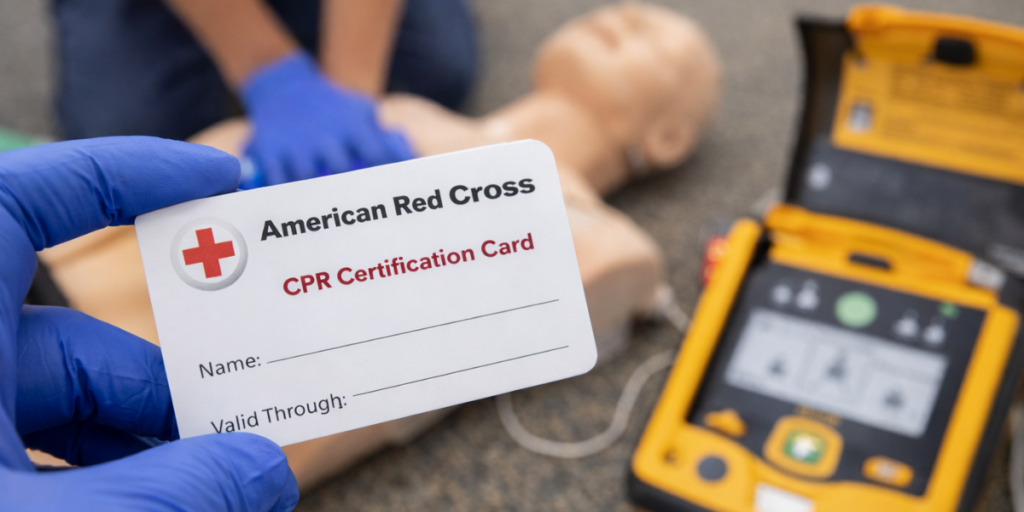
CPR and AED certification is training that prepares someone to respond in the first minutes of a cardiac emergency. It teaches you how to recognize when a person needs help, how to perform high-quality chest compressions, and how to use an Automated External Defibrillator (AED) safely and effectively.
For many organizations, certification is also a practical requirement. It supports workplace safety, strengthens emergency preparedness, and gives staff the confidence to act instead of freezing when seconds matter. When an AED is available and people know how to use it, the entire response becomes faster and more effective.
Life Support Systems has been empowering people to save lives since 1977. Our training programs are designed to fit your environment, your equipment, and your team—so your organization isn’t just equipped, but truly ready.
What CPR And AED Certification Means
Certification is more than watching a video or reading instructions. It is a structured training program where participants practice critical skills and receive verification that they can perform them correctly.
Most CPR and AED certifications result in a card or digital credential that shows the course completed and the date it expires. This matters for employers and organizations that need documented readiness. It also matters for individuals who want confidence that they can respond under pressure.
A strong certification class doesn’t just teach steps. It builds muscle memory, reduces hesitation, and helps responders understand what to do first, what to do next, and how to stay calm when everything feels urgent.
The Quick Answer
CPR and AED certification teaches you how to respond to sudden cardiac arrest and similar emergencies by performing CPR and using an AED. It covers how to assess the scene, check for responsiveness, start compressions, and apply an AED as soon as it’s available.
Certification may also include choking response and may include adult, child, and infant skills depending on the course. Credentials are time-limited and require renewal, because guidelines evolve and skills fade without practice.
If your workplace, school, or facility has an AED, CPR and AED certification is one of the most practical steps you can take to make that AED usable in real life.
What CPR And AED Certification Covers
In a quality class, participants learn a repeatable response sequence and practice it until it becomes familiar. The goal is to make the emergency response feel structured, even when emotions are high.
CPR Skills: What You Practice And Why It Matters
CPR focuses on maintaining blood flow when the heart has stopped or is not beating effectively. Students learn how to recognize an emergency, start compressions quickly, and maintain a steady pace with minimal interruptions.
You’ll also learn how teamwork works during a response. Switching compressors, communicating clearly, and minimizing pauses helps keep CPR quality high until the AED arrives and is applied.
AED Skills: How Defibrillation Fits Into The Response
AED training teaches you how to use the device safely and confidently. AEDs are designed to guide the user with voice prompts, but training helps reduce hesitation and prevents common errors.
Participants practice basic pad placement concepts, following prompts, and staying clear during analysis and shock delivery. Training also reinforces that CPR continues until the AED instructs otherwise, and resumes immediately after.
Adult, Child, And Infant Differences
Many courses cover adult, child, and infant procedures. The technique and approach can differ between adults, children, and infants, and responders benefit from understanding those differences before a real emergency.
For environments where children are present—schools, childcare, family venues, youth sports—this portion of training is especially important for confidence and speed.
Choking Response
Most CPR and AED courses also include choking response. That typically covers how to recognize choking, what steps to take, and how the response differs between adults, children, and infants.
Choking events can happen anywhere. Knowing what to do can prevent a situation from escalating into a cardiac emergency.
CPR And AED Certification Vs Other Training
People often search for CPR and AED certification but aren’t sure what course is right for their role. The best course depends on your environment and what you’re expected to handle.
CPR And AED Certification
CPR and AED certification is a strong fit for most workplaces, schools, public venues, and community responders. It focuses on the core lifesaving skills needed in the first minutes of sudden cardiac arrest.
If your organization has an AED onsite, CPR and AED training is the baseline that helps that AED become a real emergency response tool, not just equipment on a wall.
First Aid With CPR And AED
Some organizations choose First Aid with CPR and AED for broader coverage. This is common in environments with higher foot traffic, public-facing staff, or a greater likelihood of everyday injuries.
If your team is responsible for a wider range of incidents, adding First Aid can be a practical step toward fuller readiness.
How Long CPR And AED Certification Lasts
Most CPR and AED certifications are valid for a defined period and require renewal. Renewal matters because skills decay, and best practices evolve.
For organizations, renewal scheduling also creates a predictable safety rhythm. Instead of scrambling when credentials expire, you can plan training cycles that keep coverage steady across shifts and departments.
If your team has turnover or multiple sites, building a renewal plan into your program helps maintain consistent readiness year-round.
Online Vs In-Person Vs Blended Training
Training format should fit your team’s schedule while still building real confidence. Different formats exist for different needs.
In-Person Training
In-person training offers hands-on practice with real-time instructor feedback. It’s a strong choice for teams that want to build confidence quickly and practice scenarios that match their environment.
It also allows instructors to tailor examples to your facility and your equipment, which improves retention and response speed.
Blended Options
Blended training can combine online coursework with an in-person skills session. This is often a practical option for busy teams that still want hands-on evaluation.
The key is to choose an approach that supports actual readiness, not just completion.
Who Typically Needs CPR And AED Certification
Certification isn’t only for healthcare workers. In many emergencies, the first responder is a coworker, teacher, coach, staff member, or bystander.
Workplaces often certify safety teams, managers, operations staff, and security personnel. Schools commonly certify teachers, administrators, coaches, and support teams. Gyms and fitness centers frequently certify trainers and front desk staff.
Childcare and youth programs often require certification because the risk profile is different and time-sensitive. Public venues benefit because they serve large groups of people where emergencies can occur without warning.
Individuals also pursue certification for preparedness at home. Many people take CPR and AED training because they want to be ready for family members, teammates, or anyone who may need help.
What To Expect In A CPR And AED Class
A strong class is structured, practical, and designed to build confidence. Participants typically practice checking responsiveness, calling for help, starting compressions, and using an AED with guided prompts.
Expect hands-on practice with coaching. You’ll also encounter scenarios that reflect real conditions, because the goal is not perfect memorization. The goal is confident action.
At the end of the course, participants typically receive documentation of completion and guidance on renewal timelines. For organizations, training records can support internal tracking and compliance.
Common Myths That Stop People From Getting Certified
Many people avoid training because they assume they’ll do it wrong. Certification exists to remove that fear by giving you a clear process to follow and practice.
Some believe AEDs are dangerous or complicated. In reality, AEDs are designed to guide users and only deliver a shock if it is needed. Training helps people trust the device and follow prompts quickly.
Others assume CPR and AED certification is only for healthcare workers. Most cardiac emergencies happen outside hospitals. That makes workplace and community readiness essential.
Finally, some believe one class lasts forever. Renewal keeps skills current and supports reliable response over time.
What Certification Life Support Systems Provides
Life Support Systems provides American Red Cross CPR certification and AED use training tailored to your environment and equipment. Courses can be delivered on-site with flexible scheduling, making it easier to train teams without disrupting operations.
Training should fit the realities of your facility. A school is different from a warehouse. A corporate office is different from a fitness center. Your emergency plan should match the way people move, work, and gather in your space.
Whether you need training for a small team or a multi-site program, the goal is the same: build a culture of readiness where people know what to do and feel prepared to act.
How Certification Fits Into A Complete AED Program
CPR and AED certification is one part of emergency readiness. Equipment matters, but training is what turns equipment into capability.
A complete program also includes AED placement, clear signage, routine readiness checks, and tracking for pads and batteries. After an AED is used, the device must be returned to ready status so it remains reliable for the next emergency.
When people, equipment, and processes work together, emergency response becomes faster and more effective. That is what organizations should aim for, especially in environments with high foot traffic or higher risk.
Choosing The Right Course For Your Team
If your facility has an AED onsite, CPR and AED training is a practical baseline. If your team serves the public or manages higher-risk environments, adding First Aid can provide broader coverage for everyday incidents.
If you manage multiple locations, standardizing training cadence and documentation helps maintain consistent readiness and prevents gaps caused by turnover or scheduling changes.
The best training plan is one your team can sustain—because readiness is not a one-time event.
FAQs
What Is CPR And AED Certification?
It is training that teaches you to recognize cardiac emergencies, perform CPR, and use an AED safely. It includes skill practice and provides documentation of completion.
How Long Does CPR And AED Certification Last?
Most CPR and AED certifications are time-limited and require renewal. Renewal keeps skills current and supports workplace readiness requirements.
Can CPR And AED Certification Be Done Online?
Some training includes online components, but many teams prefer or require hands-on skills practice. Blended options can combine both.
What Do You Do First: CPR Or AED?
Start CPR immediately while someone retrieves the AED. Use the AED as soon as it arrives and follow the device prompts.
Do You Need Certification To Use An AED?
Many AEDs are designed for public use, but certification improves confidence and helps responders act faster and more effectively.
Does CPR And AED Certification Include Child And Infant CPR?
Many programs cover adult, child, and infant procedures. The best course depends on your environment and who you serve.
How Do I Renew My CPR And AED Certification?
Renewal is completed through a refresher or renewal course before your credential expires. Organizations often schedule renewals on a predictable cycle.
What CPR And AED Training Does Life Support Systems Provide?
Life Support Systems provides American Red Cross CPR certification and AED use training tailored to your facility and equipment.
Request CPR And AED Training Guidance For Your Team
CPR and AED certification is one of the most practical investments an organization can make in safety. It prepares people to act decisively and ensures your AED program is more than equipment on the wall.
If you want a training plan that fits your team size, facility type, and scheduling needs, Life Support Systems can help. Submit a request for CPR/AED training guidance, and we’ll recommend the right course format and training plan based on your environment and readiness goals.
“”Last updated on 1 month ago
 Call Us
 Email Us