

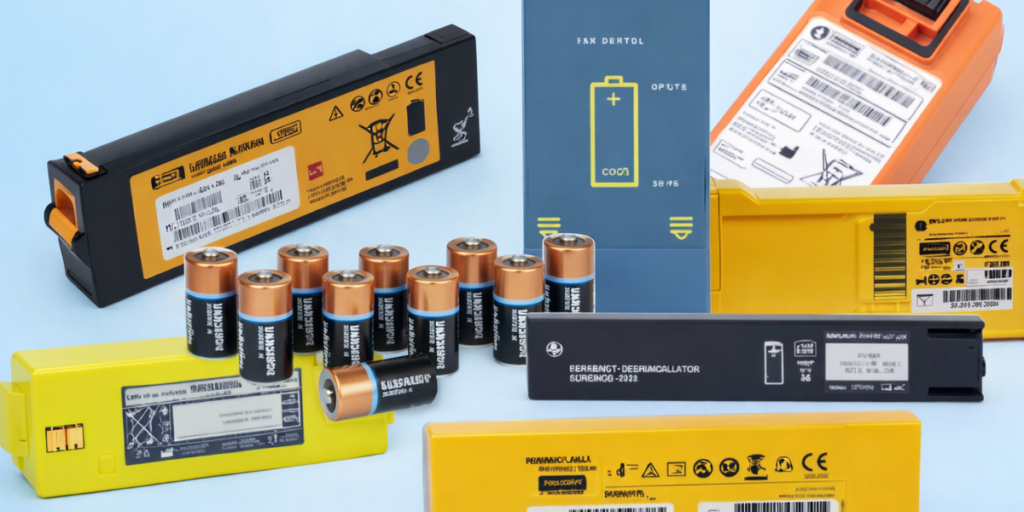
An AED is only as reliable as its power source. You can have the right device, the right placement, and the right training, but if the battery is expired, depleted, or incorrect for the model, the AED may not be rescue-ready when seconds matter.
For most organizations, battery issues are one of the most common reasons an AED slips out of Ready Status. The good news is that battery readiness is predictable when it’s managed correctly. It follows dates, alerts, and a simple routine that prevents surprises.
This guide covers how AED batteries work, how long they last, when to replace them, how to avoid common mistakes, and how to keep a multi-site program consistent. If your AED is discontinued or aging, we’ll also explain why battery sourcing becomes a critical risk factor and how to handle it responsibly.
What are AED Batteries?
Most AED batteries are non-rechargeable lithium packs built for long standby life. In many models, that standby window is measured in years, not months, because the battery needs to be ready to deliver high-voltage rescue power instantly at any time.
Replace an AED battery by its expiration date and immediately when the AED shows warning signs such as beeping, a red status indicator, a self-test fault, or a low-battery message. When in doubt, your program should follow one simple rule: if the AED is not showing Ready Status, treat it as urgent and restore readiness right away.
The Five Fast Signs Your Battery Needs Attention
These symptoms are designed to get your attention early. They are not “nice to fix someday” signals.
The most common battery-related signals include unexpected beeping or chirping, a red light or red X status indicator, a failed self-test, an on-screen low-battery message, or a battery that is at or near its expiration date. Any one of these should trigger action.
What Makes AED Batteries Different From Regular Batteries
AED batteries are not designed to power a flashlight or a household device. They are engineered for a life-safety purpose: sit quietly for years and then deliver immediate rescue performance without delay.
That is why most AED batteries are primary lithium packs. They provide long shelf life, stable voltage over time, and dependable performance under the demanding conditions of a defibrillation event. They also have built-in characteristics and testing standards that are specific to the AED model they support.
Because AEDs run automated self-tests, they rely on the battery to remain stable over a long period. A battery that is “close enough” can cause readiness faults, inconsistent performance, or a device that won’t return to Ready Status after replacement. In emergency readiness, “close enough” is not a strategy.
Primary Lithium Vs Rechargeable Options
Most workplace and public access AED programs use primary (non-rechargeable) lithium batteries because they are built for long standby life. They are designed for the reality that an AED might never be used, but must always be ready.
Rechargeable systems exist in certain professional workflows, but they require more active management. For most organizations, primary lithium packs are the simplest, most reliable match for how AEDs are deployed in real facilities.
The best approach is to match the battery system to your environment and readiness plan. The right setup reduces maintenance friction and prevents out-of-service surprises.
AED Battery Types You’ll See In The Real World
“Battery replacement” can mean different things depending on the AED model. Understanding the form factor helps you manage parts correctly and avoid ordering mistakes.
Most modern AEDs use a dedicated battery pack that clicks into the unit. Some older models may use multiple consumer-style lithium cells. Others use integrated systems where the power source and consumables are combined into a single pack.
Battery Packs
Battery packs are the most common type in modern AED programs. They are designed to be replaced quickly and typically include the appropriate labeling for expiration dates and compatibility.
Battery packs make readiness easier because they reduce complexity. They also reduce the likelihood of partial replacements or mixed brands that can lead to faults.
The most important management step is tracking the correct battery for the exact AED model, and tracking expiration with enough lead time to replace before the device becomes not ready.
Standard Consumer Cells
Some AEDs rely on multiple consumer-style cells. This can work well when maintained properly, but it can also introduce inconsistency if replacements vary in brand, age, or type.
If your AED uses this approach, it’s especially important to follow the device’s guidance on cell type and replacement approach. Mixing cells or using the wrong chemistry can affect readiness and performance.
Integrated Systems: Pad-Pak, Charge-Pak, And Combined Packs
Some AEDs use an integrated pack approach where pads and power are combined or where a special cartridge system plays a central role in readiness.
This can simplify maintenance when supply is stable. It can also become the first failure point when an AED model is discontinued or aging, because the entire system depends on the availability of that specific pack.
If your device uses an integrated system, treat it as a high-priority readiness item. If the pack becomes difficult to source, it’s often a signal that upgrade planning should start immediately.
How Long Do AED Batteries Last?
Most AED batteries are designed to last multiple years in standby. In many programs, a typical replacement cycle falls in the two-to-five-year range, depending on the model, the environment, and how the AED is handled.
Some models are designed for longer standby windows, but the safest way to plan is to use the manufacturer’s guidance and then build a buffer so you are not replacing batteries at the last possible moment.
Battery lifespan also depends on where and how the AED is stored. Temperature extremes can shorten life. Frequent handling can trigger more self-tests or increased power use. Live demonstrations and extended powered-on sessions can also reduce capacity.
The Three Dates That Confuse People
Many organizations struggle because battery dates can be presented in different ways. That confusion creates missed replacements.
You may see a manufactured date, an install-by date, and an expiration or use-by date. Not every battery will include all three, but the concept matters.
The most reliable rule is simple: never exceed the expiration date, and track installation timing so you don’t assume a battery is “new” just because it was purchased recently.
When To Replace Your AED Battery
Replacement decisions should not be guesswork. They should follow clear signals and documented dates.
A good program replaces the AED battery on schedule and replaces early enough to avoid downtime. It also replaces immediately when the AED stops showing Ready Status, because warnings exist to prevent surprise failure.
Replace Immediately When The AED Isn’t In Ready Status
If the AED beeps, shows a red indicator, fails a self-test, or reports a low-battery condition, replace the battery promptly. After replacement, confirm the AED returns to Ready Status.
If a battery swap does not restore readiness, don’t keep trying random fixes. Check pad connection and expiration next, then escalate to service. Your goal is verified readiness, not trial and error.
Replace By Expiration And Build A Buffer
Many readiness problems occur because teams wait too long to order replacement batteries. When the battery reaches expiration, you’re already late.
A better approach is to order and plan replacements one to three months ahead of the expiration date. This prevents delays, avoids gaps, and keeps your AED continuously ready.
For multi-location programs, building a replacement calendar is essential. It allows you to group replacements, reduce shipping complexity, and avoid a steady stream of last-minute issues.
Replace After Use When Appropriate
After a rescue event, pads must be replaced immediately. Battery replacement depends on the event. If the AED delivered shocks or remained powered on for an extended time, battery capacity may be reduced.
The safest approach after any use is to verify the device’s status indicator, confirm readiness, and replace components as needed to return the AED to a verified ready state.
OEM Vs Aftermarket Batteries And Why It Matters More When AEDs Are Discontinued
When an AED model is current and widely supported, sourcing batteries is straightforward. When an AED is discontinued or aging, sourcing becomes a decision point that affects safety.
Aftermarket and “compatible” batteries can vary widely in quality and traceability. For life-safety equipment, consistency matters. If the battery isn’t correct for the model, the AED may not recognize it, may throw warnings, or may fail to return to Ready Status.
A discontinued device can also push buyers into unfamiliar online marketplaces. That’s where confusion grows and risk increases.
How To Confirm You Have The Right Battery
Start with what’s printed on the battery and its packaging. OEM batteries typically have clear manufacturer branding and a part number that matches the AED model’s requirements. Packaging is usually sealed, consistent, and includes clear date labeling.
Fit is also a clue. A correct battery should seat properly without forcing. After installation, the AED should return to Ready Status promptly. If you’re getting beeps, errors, or “not ready” status immediately after replacing the battery, treat that as a red flag and verify compatibility.
The Discontinued AED Reality Check
If OEM batteries are no longer reliably available for your AED model, the AED may no longer be supportable as a dependable part of an emergency readiness program.
Integrated battery systems and specialized packs are especially vulnerable in discontinued models. When those parts disappear, replacement planning should become a priority.
Storage And Environment: The Hidden Battery Killer
Battery life is not only about time. It’s also about conditions.
Heat, cold, humidity, and vibration can shorten battery performance and create readiness alerts earlier than expected. This matters for warehouses, loading docks, facilities near exterior doors, vehicles, and outdoor cabinets.
If your AED is exposed to harsh conditions, your program should consider whether the cabinet solution is appropriate and whether your inspection cadence should be tighter than “once in a while.”
Heat, Cold, Humidity, And Vibration
Extreme temperatures are a common reason batteries fail early. Even when an AED seems protected, unconditioned spaces can swing dramatically in temperature across seasons.
Humidity and water exposure risk can also affect readiness. In industrial environments, dust and vibration add another layer. These factors don’t mean you can’t place AEDs in challenging areas. They mean you should plan the placement, cabinet protection, and maintenance routine accordingly.
Where To Store Spares
Spare batteries should be stored in a cool, dry place, clearly labeled, and tracked like installed batteries. Avoid storing spares in random supply closets where they get buried and forgotten until they’re expired.
A spare battery only helps if it’s current, compatible, and easy to access when the AED needs it.
Should You Keep A Spare AED Battery On-Site?
In many facilities, yes. A spare battery can prevent downtime and restore readiness immediately when a warning appears.
This is especially valuable for remote sites, multi-building campuses, 24/7 operations, high-traffic venues, and locations where shipping delays could leave the AED out of service longer than acceptable.
If you do keep spares, manage them like mission-critical inventory. Label them with the intended AED model, track expiration dates, and include them in the same readiness system as the installed battery.
How To Replace An AED Battery
AED Battery replacement should be simple, but the goal is not simply “swap and walk away.” The goal is verified Ready Status.
Before replacement, confirm you have the correct battery for the exact AED model. Install it without forcing. Then confirm the AED returns to Ready Status.
After replacement, document the date and the next replacement window. If the AED does not show ready status after replacement, check pad connection and expiration. If the issue persists, schedule service rather than guessing.
This process prevents the most common error: replacing the battery but leaving the AED in an unknown or not-ready condition.
Readiness Checks And Documentation That Scale
Most AED program failures are not technical failures. They are program failures. The device wasn’t checked, dates weren’t tracked, or nobody owned the routine.
A simple monthly check and basic documentation prevent most of the issues organizations face.
Monthly Ready Status Check
A monthly check should confirm the device shows ready status, has no warning beeps, and has pads and battery within date. You should also confirm the cabinet remains accessible and visible, and that the unit appears physically intact.
This process takes minutes and prevents the most common failures that appear during inspections and emergencies.
What To Document
At minimum, document the AED model and location, the battery type and expiration date, and the inspection results. Track corrective actions so issues don’t repeat.
For multi-location programs, centralizing this information is the difference between control and chaos. A shared tracker and scheduled replacement calendar reduce missed dates and reduce emergency replacements.
Common Mistakes That Take AEDs Out Of Service
Most issues are preventable. The most common mistakes include waiting until the expiration date to order, installing the wrong battery due to model confusion, storing spares improperly, and ignoring warning beeps.
Another common mistake is replacing the battery but failing to confirm Ready Status. In readiness programs, verification is the final step that matters.
Finally, avoid using your rescue AED for repeated training demos. Trainer units exist for a reason. Protect your rescue equipment’s readiness.
How Life Support Systems Helps Keep AEDs Rescue-Ready
Batteries are only one part of AED readiness, but they’re a part that can quietly take an entire program out of service if not managed correctly.
Life Support Systems supports organizations with battery and pad tracking, replacement planning, on-site service and inspections, and guidance for discontinued AED models where parts availability becomes uncertain. Whether you manage one facility or many, the goal is the same: a verified, documented Ready Status that holds up over time.
If you want to reduce surprises and keep every AED continuously ready, a readiness review can help confirm what you have, what’s coming due, and what your program needs to stay reliable.
FAQs
How Long Do AED Batteries Last?
Most AED batteries are designed for multi-year standby life, often in the 2–5 year range depending on the model and storage conditions. Always follow the battery expiration date and your device’s guidance.
How Do I Know If My AED Battery Needs Replacement?
Replace the battery if the AED beeps, shows a red status indicator, reports low battery, fails a self-test, or reaches its expiration date. The device’s readiness indicator should guide your actions.
Do AED Batteries Expire Even If The AED Is Never Used?
Yes. AED batteries have expiration dates and should be replaced by that deadline even if the AED is never deployed.
What Does It Mean If My AED Is Beeping Or Shows A Red Light?
It usually indicates the AED is not in Ready Status due to a battery issue, pad issue, or self-test fault. Treat it as urgent and restore readiness immediately.
Should I Replace The Battery Based On Install-By Or Expiration Date?
Use both. Track installation timing for planning, but never exceed the expiration date. Replace based on whichever comes first within your readiness plan.
Can I Use A Generic Battery In My AED?
AED batteries are model-specific. Using the wrong battery can prevent the AED from returning to Ready Status or create faults. Use the correct battery designed for your AED model.
Are OEM AED Batteries Better Than Aftermarket?
OEM batteries provide the highest confidence for compatibility and performance. Aftermarket options vary widely, and uncertainty increases when the AED model is discontinued.
Should I Keep A Spare AED Battery On-Site?
Many facilities benefit from keeping a spare, especially multi-site programs, remote buildings, 24/7 operations, and high-traffic venues. Track spares like installed batteries.
Can Heat Or Cold Shorten AED Battery Life?
Yes. Temperature extremes can shorten battery life and increase readiness alerts. Consider cabinet protection and a tighter inspection cadence in harsh environments.
Do I Need To Replace The Battery After A Rescue?
After a rescue, check the device status and follow readiness indicators. If the AED delivered shocks or ran for an extended time, replacement may be needed to restore full readiness.
Why Won’t My AED Return To Ready Status After A Battery Swap?
Common causes include incorrect battery compatibility, pad connection issues, expired pads, or a device fault. If the AED remains not ready after verification, schedule service.
What’s The Fastest Way To Confirm I’m Ordering The Right Battery?
Confirm your AED’s exact model, match the battery part number, and verify date labeling and packaging. If you manage multiple devices, use a centralized tracking system to prevent mix-ups.
Last updated on 3 weeks ago
 Call Us
 Email Us