

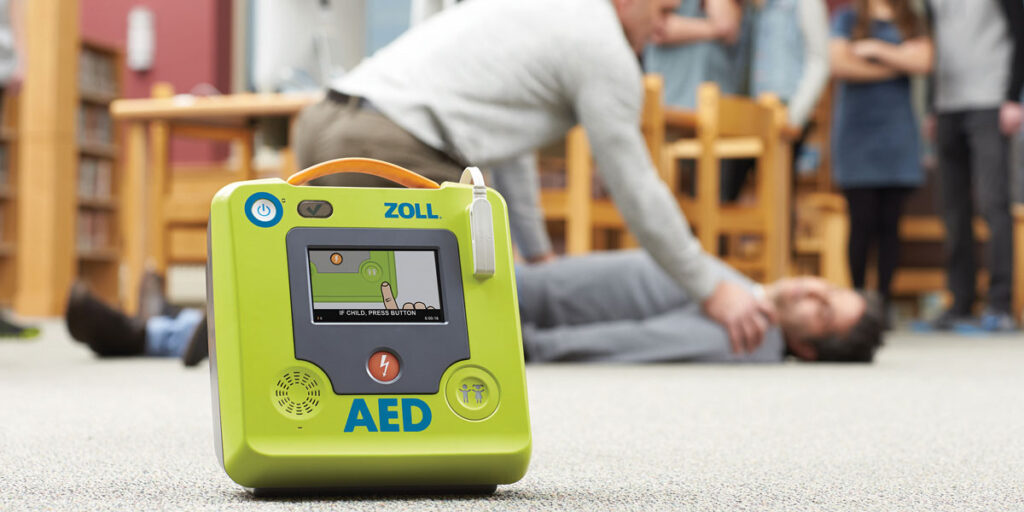
Roughly one in every 25 schools in the United States can expect a cardiac arrest event on campus in any given year. That statistic surprises most administrators—because cardiac arrest in young people feels rare until it isn’t. But the data is clear: more than 23,000 children experience out-of-hospital cardiac arrest annually, and about 40 percent of those cases are connected to sports or physical activity. Sudden cardiac arrest is the leading medical cause of death among young competitive athletes, and it doesn’t require a pre-existing diagnosis. It can happen to a seemingly healthy 14-year-old running a 400-meter sprint.
When it does happen, the math is brutal. Survival rates drop 7 to 10 percent for every minute without defibrillation. Most EMS systems can’t reach a school within the critical three-to-five-minute window. But schools that have AEDs on-site and trained responders ready to act see survival rates near 70 percent—seven times higher than the national average for out-of-hospital cardiac arrest.
That gap is the reason AED programs in schools aren’t optional anymore—and why a growing number of states are now making them law.
The Legislative Landscape Is Shifting Fast
School AED requirements have changed more in the last two years than in the prior decade. If your district’s AED program was built on guidance from 2020 or earlier, it may already be out of compliance.
Massachusetts requires all schools to have AEDs available in school buildings and at school-sponsored athletic events. The state also requires CPR training as a high school graduation requirement.
Georgia expanded its mandate through House Bill 874 (effective July 1, 2025): all public K-12 schools must now have at least one AED—not just high schools with athletic programs, as was previously required. Schools must also develop written emergency action plans and designate internal response teams. A separate provision (§38-3-154) requires public schools to procure mapping data identifying AED, trauma kit, and emergency response aid locations by July 1, 2026.
Michigan enacted two bills effective for the 2025–2026 school year. House Bill 5527 requires all public and nonpublic K-12 schools to develop expanded cardiac emergency response plans based on AHA or other nationally recognized guidelines. House Bill 5528 requires all high school coaches to maintain current CPR/AED certification. Schools are expected to place AEDs in accessible locations retrievable within one to three minutes of a cardiac emergency.
New York passed Desha’s Law, effective January 20, 2026, which requires school safety training to include sudden cardiac arrest response and mandates that AEDs in schools be clearly marked, accessible, and maintained in accordance with AHA guidelines or other nationally recognized standards.
Alabama (HB 45) requires all K-12 public and private schools to have AEDs that are regularly inspected and maintained, and mandates CPR/AED education for students in grades 9–12.
Mississippi now requires all public schools to develop cardiac emergency response plans beginning with the 2024–2025 school year.
This is not an exhaustive list—requirements vary by state and sometimes by county or municipality. But the direction is clear: legislatures across the country are moving toward mandatory AED access in schools, mandatory cardiac emergency response plans, and mandatory training for coaches and staff. If your district hasn’t revisited its program recently, now is the time.
Why Schools Are Different From Offices
Most AED buying guides treat schools like any other workplace. They’re not. Schools present a specific set of challenges that affect device selection, placement, maintenance, and training.
The population includes children. This is the defining difference. A standard office AED program is built around adult patients. A school AED program must serve children as young as five or six—and that means pediatric readiness isn’t an add-on. It’s a core requirement. The AHA recommends pediatric pads or settings for children under eight years of age or weighing less than 55 pounds. For children eight and older, adult pads are appropriate.
Athletic events are the highest-risk setting. Nearly 40 percent of sudden cardiac arrests in people under 18 are linked to sports and physical activity. Fields, gyms, pools, and tracks need AED coverage—and many of those locations are far from the main building where the device is typically stored. A program that only places AEDs in hallways doesn’t cover the practice field three minutes away.
The building is large and complex. A typical school campus has multiple floors, wings, outdoor facilities, and areas that are locked or access-controlled at different times of day. The three-to-five-minute response window the AHA recommends for AED retrieval requires intentional placement planning, not just mounting a device near the front office.
The responders are teachers, coaches, and staff—not safety professionals. Most school employees have no medical background. They need a device that guides them clearly under extreme stress, and they need training that goes beyond a one-time orientation during August in-service week.
Turnover is constant. Staff leaves. New teachers arrive. Coaches rotate. The person who was trained two years ago may have moved to another district. A school AED program needs a training cycle built into the school calendar, not treated as a one-time event.
Pediatric Pad Considerations: The Detail That Matters Most in Schools
This is the section that generic AED guides skip over or reduce to a single line. In a school setting, pediatric readiness deserves serious attention.
The “8-year, 55-pound rule.” The AHA recommends using pediatric pads (or a pediatric energy-reduction setting) for children under eight years of age or weighing less than 55 pounds. For children eight and older, adult pads are used. This means an elementary school’s AED program has different pad requirements than a high school’s—and a K–12 campus needs to account for both.
Pediatric pads deliver lower energy. Adult pads typically deliver around 150 joules. Pediatric pads deliver approximately 50 joules—a dose calibrated for a smaller body and heart. This energy reduction is achieved either through a built-in attenuator in the pads themselves, a separate pediatric key or switch on the device, or a universal pad system that adjusts energy automatically.
Placement is different for small children. Adult pads are placed on the front of the chest (anterior-lateral position). For children whose chests are too small for both pads to fit without overlapping, the AHA and Red Cross both recommend anterior-posterior placement: one pad on the center of the chest, one on the center of the back. This ensures the electrical current passes through the heart effectively.
How different manufacturers handle pediatric readiness:
- Philips HeartStart OnSite: Uses a separate infant/child pad cartridge (M5072A) that includes a built-in energy attenuator. When the pediatric cartridge is connected, the device automatically adjusts the energy dose.
- Philips HeartStart FRx: Uses a reusable infant/child key that reduces energy when inserted. The key doesn’t expire (unlike pads), which can reduce long-term costs for schools—but it must be stored with the device and accessible to responders without searching.
- ZOLL AED 3 with CPR Uni-padz: Uses one universal set of pads for all ages. A switch on the device toggles between adult and pediatric energy delivery. This eliminates the need to purchase, track, and replace a separate set of pediatric pads.
- ZOLL AED Plus: Requires separate pediatric pads (Pedi-Padz II), which are sold separately and have their own expiration date to track.
- Stryker LIFEPAK CR2: Has a built-in pediatric mode that can be activated without changing pads—a single set of electrodes works for both adults and children.
- Defibtech Lifeline: Requires separate pediatric pads, sold and tracked independently.
- HeartSine Samaritan PAD series: Uses a separate Pediatric-Pak (combined pad and battery cartridge) for children ages 1–8. When the Pediatric-Pak is connected, the device automatically adjusts energy output.
The critical maintenance detail: Pediatric pads expire on the same two-to-four-year cycle as adult pads, depending on the manufacturer. If your school has separate pediatric pads, they need to be tracked, inspected, and replaced on their own schedule—independent of the adult pads. A device with current adult pads but expired pediatric pads is not fully ready for a school environment.
If pediatric pads aren’t available in an emergency, use adult pads. The AHA is clear that an adult-energy shock is far better than no shock at all. Place one pad on the chest and one on the back so the pads don’t touch or overlap. Don’t delay treatment to search for pediatric pads that may not be on-site.
Placement Strategy for Schools
School AED placement needs to account for a wider range of scenarios than a typical office. The building is occupied differently at 7:30 AM, noon, 3:30 PM, and 7:00 PM during a basketball game.
Indoor locations: Main hallways near the front office, cafeteria, gymnasium, and any area where large groups gather. The device should be mounted in a visible, unobstructed, alarmed cabinet at approximately four feet off the ground with universally recognized AED signage.
Athletic facilities: Gyms, weight rooms, pools, and tracks. The field house or athletic training room is an obvious location, but the practice field, 200 yards away, also needs coverage. Some schools address this with a portable AED in a carry case assigned to the athletic trainer. Michigan’s law specifically calls for AED access within one to three minutes of a cardiac emergency during athletic events.
After-hours and event locations: Auditoriums, performing arts centers, and multi-purpose rooms used for evening events. If the AED is locked inside a wing that’s closed after 4:00 PM, it’s not available during the 7:00 PM school play.
Outdoor and remote areas: Portable AEDs with carry cases can cover outdoor events, field trips, and off-campus athletics. Ensure the device’s storage conditions are within the manufacturer’s recommended temperature range—leaving an AED in a hot equipment shed or unheated press box in New England can degrade pads and batteries faster than expected.
Training: Building Confidence, Not Just Compliance
An AED is designed for anyone to use—but “designed for use” and “confident enough to act” are different things. The AHA’s own data shows that only about 41 percent of out-of-hospital cardiac arrest victims receive bystander CPR. The barrier isn’t the equipment. It’s hesitation.
In a school setting, the people most likely to be first on scene are classroom teachers, PE instructors, coaches, office staff, and cafeteria workers. They need hands-on, scenario-based training—not just a slide deck during orientation.
Core training for designated responders: AHA HeartSaver CPR AED or Red Cross First Aid/CPR/AED certification, renewed at least every two years. This should include hands-on compression practice, AED pad application on a training mannequin, and simulated emergency scenarios. Fully online courses typically do not meet OSHA’s recommendation for hands-on skills evaluation—choose blended or in-person formats for compliance.
Coaches require special attention. Several states now mandate CPR/AED certification for coaches, including Michigan (effective 2025–2026). Even where it’s not yet required, coaches are statistically the most likely school staff members to witness a student cardiac arrest—because sports are the highest-risk activity.
Awareness-level training for all staff: Every employee should know where the AEDs are located, how to activate the school’s emergency response plan, and how to call 911. This doesn’t require certification—it requires an annual walkthrough built into the school calendar.
Student CPR education: 40 states plus D.C. now require CPR education before high school graduation. Massachusetts is among them. This creates a generation of graduates who enter the workforce already trained in basic life support—and it normalizes emergency readiness as a community expectation, not just an institutional obligation.
The Cardiac Emergency Response Plan (CERP)
A growing number of states now require schools to maintain a formal Cardiac Emergency Response Plan. The AHA has published a CERP template developed in collaboration with 11 national health and safety organizations, available free for any school to download and adapt.
A CERP should define who does what when someone collapses (call 911, start CPR, retrieve AED, direct EMS to the scene), where every AED is located and how to reach each one within the response time target, which staff members are trained and certified, how the school communicates the plan to staff, substitutes, and event volunteers, and what happens after an incident (restocking, reporting, debriefing, emotional support).
The plan should be rehearsed—not just filed. A tabletop exercise or live drill at least once per year ensures that staff actually know the steps when adrenaline takes over.
Maintenance: The Part That Keeps It All Working
Everything that applies to office AED maintenance applies to schools—but with one additional complication: schools shut down for summer, winter, and spring breaks. A device that goes unchecked for eight weeks during summer is eight weeks of potential drift. Pads can expire. Batteries can reach end-of-life. Cabinets can be obstructed by renovation materials. Temperature-controlled buildings may not be climate-controlled when they’re empty.
Build your inspection schedule around the school calendar. Monthly checks during the school year, plus a comprehensive pre-opening inspection before each new school year, and a check before and after any extended break. TheAHA recommends monthly inspections at a minimum, and many states require documented checks.
Assign a program coordinator—a specific person, not a committee—who is accountable for the inspection schedule, consumable tracking, training coordination, and compliance records. Without clear ownership, school AED programs drift out of readiness faster than corporate programs because of higher staff turnover and the seasonal rhythm of the academic year.
How Life Support Systems Helps Schools
Life Support Systems works with school districts, independent schools, and educational organizations across New England to build AED programs that are built for schools—not adapted from corporate templates. That means device selection matched to your campus layout and student population, pediatric pad planning and tracking as a core program element (not an afterthought), placement strategy based on response time mapping for buildings and athletic facilities, staff training with hands-on certification courses, maintenance and inspection support aligned with the school calendar, and compliance documentation for your state’s requirements.
Contact us to build or review your school’s AED program →
Frequently Asked Questions
Does my school legally need an AED? Requirements vary by state. Massachusetts requires AEDs in school buildings and at athletic events. States like Georgia, Alabama, Michigan, New York, and Mississippi have enacted or expanded school AED mandates in 2024–2026. Check your state’s current AED laws for specific requirements.
Do we need pediatric pads? If your school serves children under eight or under 55 pounds, yes. The AHA recommends pediatric pads or a pediatric energy-reduction setting for this age group. Some devices (ZOLL AED 3, Stryker LIFEPAK CR2) handle this with a built-in mode switch. Others require separate pediatric pads that must be purchased and tracked independently.
How many AEDs does a school need? Enough to cover every area of campus within a three-to-five-minute retrieval window. For most schools, that means at least one per building, plus coverage for athletic facilities, outdoor areas, and event spaces. Michigan’s law references one-to-three-minute access during cardiac emergencies.
Who should be trained? Designated responders (nurses, coaches, PE teachers, front office staff) should hold current CPR/AED certification. All other staff should receive awareness-level orientation annually. Several states now require coaches to maintain CPR/AED certification.
What is a Cardiac Emergency Response Plan (CERP)? A written document that defines how your school responds to a suspected cardiac arrest—who calls 911, who starts CPR, who retrieves the AED, and how EMS is directed to the scene. The AHA provides a free CERP template developed for schools. Many states now require one.
How often should school AEDs be inspected? The AHA recommends monthly visual inspections. Many states require documented monthly or quarterly checks. Schools should also perform pre-year and post-break inspections to account for extended periods when buildings may be unoccupied.
Can a school use an AED on a student even without pediatric pads? Yes. The AHA is clear that using adult pads on a child is far better than not using an AED at all. Place one pad on the chest and one on the back so they don’t overlap. Don’t delay treatment to search for pads that may not be available.
This article is for informational purposes and does not constitute legal, medical, or regulatory advice. School AED requirements vary by state. Content reflects current AHA 2025 Guidelines, OSHA guidance, manufacturer documentation, and state legislative summaries, current as of early 2026. Consult your state education department and legal counsel for compliance requirements specific to your district.
Related reading from Life Support Systems:
Last updated on 1 month ago
 Call Us
 Email Us