

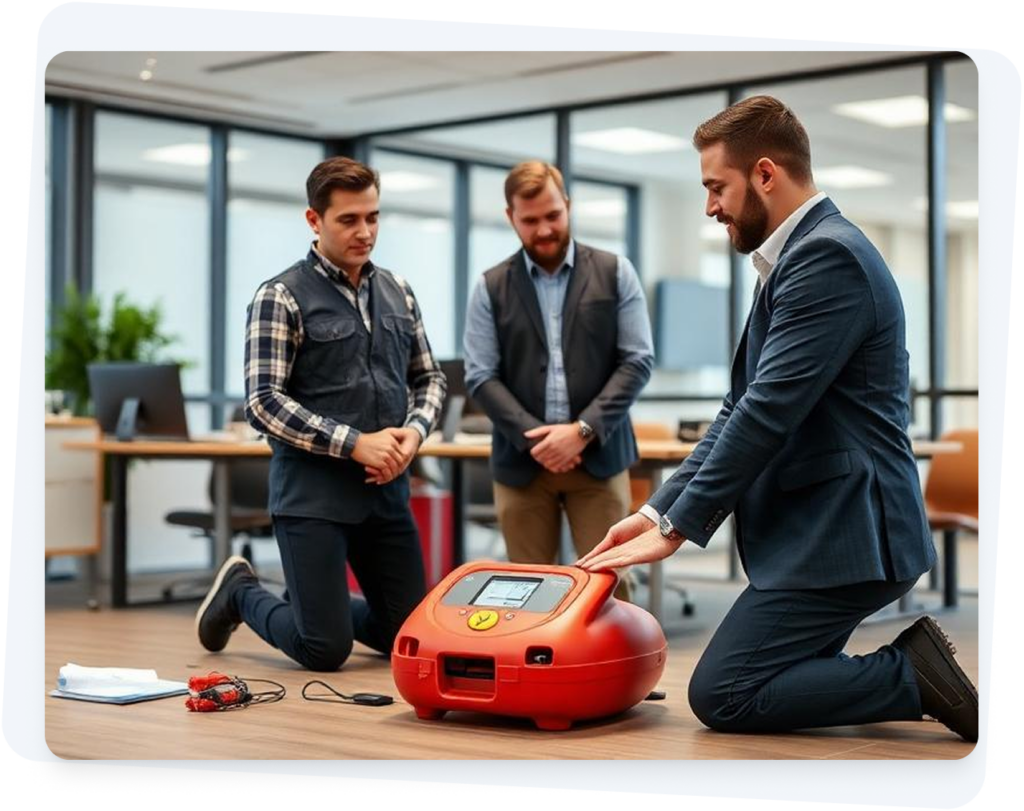
Being ready for medical emergencies in the workplace is essential for the safety of your employees and visitors. One of the most important tools in a workplace safety plan is an AED (Automated External Defibrillator). Sudden cardiac arrest can happen without warning, and every minute without access to an AED significantly reduces the chances of survival.
In 2026, choosing the best AED for your office goes beyond simply buying a device. It involves understanding AED service requirements, selecting the right model for your environment, and ensuring proper maintenance and staff training. This guide looks at top AED brands, compares their features, and highlights what to consider when keeping your office rescue-ready.
Why Offices Need Expert AED Service
Having an AED in your office is not just about compliance. A well-maintained AED ensures that employees can respond quickly in an emergency. Expert AED service includes routine inspections, battery checks, pad replacements, and professional guidance to keep the device operational at all times.
On-site AED programs can help your office:
- Maintain compliance with federal and local regulations.
- Keep devices ready for immediate use.
- Provide peace of mind for employees and visitors.
Key Considerations When Choosing an Office AED
When selecting an AED, consider the following:
Usability: Choose a device designed for untrained responders, with clear voice prompts and visual guidance to support quick and confident action during an emergency.
Accessibility & Inclusivity: Select an AED with bilingual voice prompts and clear visual cues for hearing-impaired users, ensuring anyone in the workplace can respond effectively during an emergency.
Maintenance: Look for AEDs that provide maintenance alerts and can easily be serviced by certified providers.
Environmental Suitability: Consider workplace conditions such as high humidity, dust, or temperature variations. Some AED models offer higher IP ratings for better protection in challenging environments.
Battery Technology: Choose a device with dependable battery technology, such as lithium-ion, to ensure consistent performance and reliability.
Warranty & Support: Check for warranty coverage and availability of support from the manufacturer or service provider.
Cost: Factor in not just the purchase price but also maintenance, replacement parts, and training.
For offices, combining a high-quality AED with on-site AED services ensures devices remain functional, and staff are confident in their use.
Head-to-Head AED Brand Comparisons
To help you choose the best AED for your office, we’ve compared top brands. The comparisons focus on usability, maintenance, durability, battery life, warranty, and price.
1. ZOLL AED Plus vs Philips HeartStart OnSite
| Feature | ZOLL AED Plus | Philips HeartStart OnSite | Notes |
| Usability | Real-time CPR feedback | Clear voice prompts | Both easy to use, ZOLL offers CPR guidance |
| Maintenance | Self-checks, battery alerts | Monthly alerts, pad replacement reminders | HeartStart is simple and easy to use |
| Durability | Durable casing | Lightweight, moderately durable | ZOLL features a more robust build |
| Battery Life | Up to 5 years | Up to 4 years | ZOLL offers longer battery life |
| Warranty | 8 years | 8 years | Both have excellent coverage |
| Price | Higher | Moderate | ZOLL more expensive but offers advanced features |
Pros & Cons:
- ZOLL AED Plus: Pros – CPR feedback, durable, long battery; Cons – Higher cost, slightly heavier.
- Philips HeartStart OnSite: Pros – Lightweight, easy to use, moderate cost; Cons – Slightly shorter battery life, fewer advanced features.
2. Defibtech Lifeline vs Cardiac Science Powerheart G5
| Feature | Defibtech Lifeline | Cardiac Science Powerheart G5 | Notes |
| Usability | Simple interface, voice instructions | User-friendly, automated prompts | Both very office-friendly |
| Maintenance | Self-tests, battery/pad alerts | Advanced battery tracking | Powerheart provides detailed maintenance logs |
| Durability | Rugged, water-resistant | Durable, lightweight | Known for its rugged design |
| Battery Life | 4 years | 4 years | Similar performance |
| Warranty | 8 years | 8 years | Reliable coverage for both |
| Price | Moderate | Slightly higher | G5 offers more advanced monitoring features |
Pros & Cons:
- Defibtech Lifeline: Pros – Durable, easy to maintain; Cons – Slightly bulkier.
- Powerheart G5: Pros – Advanced monitoring, compact; Cons – Higher cost, more technical features may require training.
Which AED is Right for Your Office?
Choosing the right AED isn’t about the size of your office. It depends more on your environment, your team, and how the device will be used.
- User Type: Most workplaces rely on people who aren’t medically trained, so it’s important to choose an AED that’s easy to use, with clear voice instructions that guide someone step by step.
- Accessibility Needs: If your workplace has people who speak different languages or may have hearing difficulties, look for an AED with bilingual prompts and clear visual instructions.
- Environment: Think about where the AED will be placed. If your office has dust, humidity, or temperature changes, choose a model that can handle those conditions.
- Service & Maintenance: Make sure the AED can be easily maintained and supported through a professional service program so it’s always ready when needed.
- Deployment Strategy: Instead of picking one AED based on office size, focus on placing enough units in the right locations so they can be reached quickly in an emergency.
What matters most is having the right setup so your team can act quickly and confidently.
Maintenance & AED Service Requirements
Proper AED maintenance is critical for effective emergency response. Offices should:
- Perform monthly inspections for battery, pads, and device readiness.
- Schedule professional AED service for preventive maintenance and troubleshooting.
- Track compliance documentation to meet local and federal guidelines.
A trusted provider like Life Support Systems can support your office with AED maintenance and training, helping keep your devices ready when needed.
Conclusion
Selecting the best AED for your office requires balancing usability, durability, cost, and maintenance. Head-to-head comparisons like ZOLL vs Philips or Defibtech vs Cardiac Science make it easier to choose the right device.
For offices looking for reliable AED service, professional maintenance, and expert guidance, Life Support Systems offers nationwide on-site services, training, and equipment support to keep your workplace safe and compliant.
Frequently Asked Questions (FAQs)
1. What are the AED service requirements for offices?
AED service requirements include regular inspections, checking battery and pad expiration dates, maintaining service records, and ensuring the device is always ready for use. Many offices also rely on professional AED service programs for ongoing support and compliance.
2. What is an on-site AED program?
An on-site AED program includes device installation, routine maintenance, staff training, and compliance tracking to ensure the AED is always ready during an emergency.
3. Where should an AED be placed in an office?
An AED should be placed in a visible and easy-to-access location where it can be reached within a few minutes, such as common areas, hallways, or near high-traffic zones.
4. Can untrained employees use an AED?
Yes, AEDs are designed for untrained users and provide clear voice and visual instructions to guide them step by step during an emergency.
5. How often should AEDs be maintained?
AEDs should be checked monthly for battery status, pad expiration, and overall readiness. Regular professional servicing is also recommended to ensure proper functioning.
Last updated on 1 week ago
 Call Us
 Email Us