

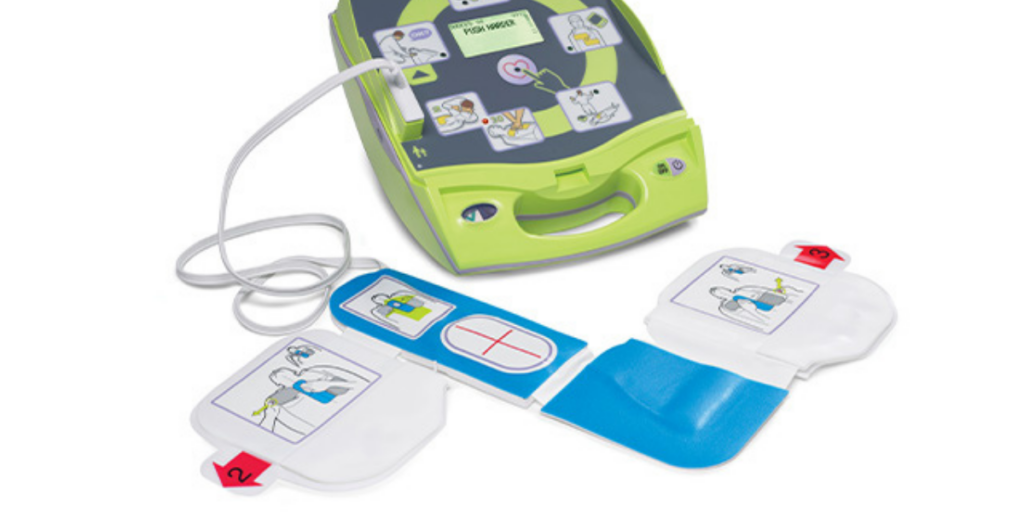
AEDs are built for a moment that arrives without warning. When sudden cardiac arrest happens, your team needs the device to power on, read the rhythm, and deliver clear prompts—without delays or errors.
But AED readiness isn’t just about the unit on the wall. It depends on the components that make the rescue possible. Among all AED supplies, pads are the most common “quiet failure point” because they can look fine right up until the moment they don’t work as expected.
If you manage AEDs for a workplace, school, gym, venue, or multi-site organization, understanding pad expiration is one of the simplest ways to reduce risk. This guide explains why AED pads expire, what can go wrong when they do, and how to keep every device in a verified “ready” state.
Pads Expire Because Performance Degrades
AED pads expire because the materials inside them change over time. The conductive gel and adhesive backing are engineered to stick firmly to skin and conduct electrical signals reliably. As those materials dry out or break down, the pad’s performance becomes less predictable.
Pad expiration isn’t a technicality. It’s a reliability boundary. In a real rescue, pads must work under movement, sweat, clothing removal, and ongoing CPR. If adhesion or conductivity is compromised, the AED’s ability to analyze the rhythm and deliver therapy can be affected.
That’s why manufacturers set a defined shelf life, even if the package remains unopened. The goal is not to sell replacements. The goal is to ensure the pads you have on-site are dependable at the worst possible time.
What AED Pads Are Designed To Do In A Rescue
AED pads do more than deliver a shock. They play a role in nearly every critical step the AED performs.
Pads must attach quickly and stay attached. In a chaotic emergency, responders may be working on a hard floor, in a hallway, or in a crowded room. The pads need to stick firmly through compressions, repositioning, and body movement.
They also need to conduct electrical signals effectively. Before the AED delivers a shock, it analyzes the heart rhythm through the pads. Weak contact can interfere with the quality of that analysis. When a shock is needed, the pads must deliver energy efficiently and safely.
In short, AED pads are the connection between the device and the person. If that connection is unreliable, everything becomes harder—slower rhythm analysis, extra prompts, more confusion, and higher stress for the responder.
The Main Reason AED Pads Expire: Conductive Gel Breaks Down
The most common reason pads expire comes down to gel.
AED pads use a conductive adhesive gel that helps the pad stick and conduct electricity. That gel is water-based, and over time it naturally changes. It can dry out, thicken, or lose uniformity, even when the packaging appears intact.
This matters because AED pads must handle real-world conditions, not ideal conditions. In a rescue, the chest may be sweaty, hairy, or moving. Clothing has to be removed. CPR compressions create repeated motion that can cause weak pads to lift slightly and lose contact.
Even small changes in gel performance can reduce adhesion or interfere with the pad’s ability to maintain stable contact. That’s why pad shelf life is finite. The pad’s job is too important to rely on “probably still good.”
Other Reasons Pads Expire Beyond The Gel
Gel is the main driver, but it’s not the only factor.
The adhesive backing and the pad materials also age. Over time, the layers that support conduction and adhesion can weaken. Packaging seals can also degrade, and even a tiny puncture can let in air or moisture that accelerates drying.
Storage conditions amplify these issues. Pads stored near heat sources, in hot vehicles, near exterior doors, or in humid environments can age faster than expected. Temperature swings are especially harsh because they stress the seal and the gel.
There’s also a practical readiness reason behind expiration dates. Standards and expectations evolve. Expiration cycles help ensure older components are not kept in service indefinitely in environments where reliability and consistency matter.
What Can Go Wrong If AED Pads Are Expired
Expired pads don’t always fail in a dramatic way. Sometimes they create small problems that add up into delays.
One common issue is poor adhesion. Pads that don’t stick well can lift during CPR, especially when compressions are strong and consistent. When contact is unstable, the AED may prompt the rescuer to check pads, stop moving, or reapply pads. That can interrupt the flow of CPR and increase hesitation.
Another issue is reduced conductivity. If the pad can’t conduct signals reliably, the AED’s rhythm analysis may be delayed or affected. The device may show pad faults or indicate a problem during self-checks. In some cases, an AED may not reach a ready state because it detects a pad-related issue before the rescue ever happens.
Even when the AED powers on, responders might lose time troubleshooting. In an emergency, time is the resource you do not have. The best AED program prevents these scenarios by ensuring pads are always within date, sealed, and properly stored.
How To Tell If Your Pads Are Expired Or Failing
The simplest way to stay ahead of pad expiration is to treat it like any other safety inventory item: check dates, verify readiness indicators, and replace before failure.
Start with the expiration date on the pad package or cartridge label. It’s usually clearly printed. If you manage multiple locations, it’s worth keeping a centralized list so replacements are planned rather than rushed.
Next, pay attention to the AED’s readiness status. Many AEDs show a clear “ready” indicator when everything is functioning correctly. If the AED beeps, chirps, or shows a “not ready” symbol, pads are one of the first things to check. The unit may also display messages such as “check pads” or “replace pads.”
Finally, look for packaging damage. If the pad packet is torn, punctured, wet, or opened, treat the pads as compromised. Even if they look usable, you cannot trust the seal, and the gel may have already started to dry.
Do Pads Expire Even If They’re Never Used?
Yes, and this is one of the most important points for facility managers.
Pads expire even if they’re never opened because the gel and adhesives are chemical materials. They change over time. The packaging slows the process and protects the pads, but it does not stop aging completely.
This is why “we never used the AED” is not a reason to ignore pad replacement. AED readiness is based on what will work today, not what has been used historically.
Can You Use AED Pads After The Expiration Date?
In an emergency readiness program, relying on expired pads is strongly discouraged.
Pads are designed for dependable performance under stress. Once they pass their shelf life, you can’t verify that performance. They might stick, or they might not. They might conduct properly, or they might trigger prompts and delays.
The cost of replacement is small compared to the risk of failure. The right approach is to replace pads before expiration so there is never a question about readiness.
Why Do Some Pads Last Longer Than Others?
Pad lifespan varies by manufacturer and model. Different devices use different gel formulations, packaging systems, and storage assumptions. Some pad cartridges are designed for longer shelf life, while others are built around different performance characteristics.
Rather than comparing numbers across brands, the most reliable approach is simple: follow the pad expiration date for the specific model you have and build a replacement schedule that prevents last-minute shortages.
How To Prevent Pad Expiration From Taking Your AED Out Of Service
The strongest AED programs treat pad replacement as routine, not reactive.
A simple system starts with tracking pad expiration dates and ordering replacements early. If you wait until the week of expiration, you risk shipping delays, wrong parts, or downtime. A buffer window helps you replace on your schedule, not on the AED’s warning schedule.
Monthly readiness checks are another high-impact habit. In a few minutes, you can confirm the unit shows “ready,” pads are within date, the cabinet is accessible, and nothing has changed in the environment that could block access.
Storage matters, too. Keep pads in the AED cabinet or response kit, away from direct sunlight, excess heat, and humidity. If your AED is mounted in a harsh environment, it may be worth reviewing cabinet type, placement, and replacement cadence.
Finally, consider keeping a spare set of pads on-site for facilities where downtime is unacceptable. Spares are especially useful for high-traffic locations, remote sites, or multi-location programs where replacements need to be immediate.
Adult Pads Vs Pediatric Pads: A Readiness Detail That Gets Missed
Most AED stations are set up with adult pads. That’s appropriate for many environments.
But if your facility regularly includes children—schools, childcare, youth sports venues, community centers, and family-facing locations—pediatric capability should be part of the plan. Depending on the AED model, pediatric readiness may require pediatric pads or another accessory that changes energy settings.
The key is to ensure pediatric components are within date and stored in a way that is obvious to responders. In a rescue, nobody wants to search for a pediatric kit in a drawer behind the desk.
A well-prepared AED station makes the right supplies easy to locate, clearly labeled, and consistently tracked.
After A Rescue Or Drill: Return The AED To Ready Status
Pads are single-use once opened and applied. If the pad package is opened during a rescue or even during a drill with live pads, those pads should be replaced.
After any use, the goal is to return the AED to a verified ready state. That usually includes replacing pads immediately, checking the unit’s readiness indicator, and confirming the device is fully assembled and accessible.
It’s also a good time to confirm your inventory plan. If the AED was used today, can you restore readiness today? Strong programs can.
Keep Your AED Program Rescue-Ready, Not Just Installed
AED readiness is not a one-time setup. It’s an ongoing system that depends on consistent checks, documented replacement cycles, and reliable support.
Life Support Systems helps organizations keep AED programs in a verified ready state through equipment support, replacement planning, on-site service, and readiness tracking. Whether you have one location or a nationwide footprint, the goal is the same: when an emergency happens, the device and components work exactly as intended.
If you want to reduce the risk of expired pads taking an AED out of service, request a readiness review. We’ll help you confirm what’s installed, what’s coming due, and what your program needs to stay rescue-ready without last-minute surprises.
FAQs
Why Do AED Pads Expire Even If They’re Sealed?
AED pads contain conductive gel and adhesives that change over time. Sealed packaging slows aging, but it does not stop material degradation.
What Happens If You Use Expired AED Pads?
Expired pads may not stick well or conduct electricity reliably. That can lead to device prompts, interruptions during CPR, or reduced confidence in rhythm analysis and shock delivery.
How Long Do AED Pads Typically Last?
Pad shelf life varies by model and manufacturer, but many fall within roughly 18 months to several years. Always follow the expiration date printed on the package or cartridge.
Do AED Pads Dry Out Faster In Heat Or Humidity?
Yes. Heat, humidity, and temperature swings can accelerate pad degradation and can compromise packaging seals over time.
Can Expired Pads Cause An AED To Show “Not Ready”?
They can. Many AEDs perform self-tests and may flag pad faults, pad connection issues, or readiness warnings when pads are expired or compromised.
Where Is The Expiration Date On AED Pads?
It’s usually printed on the pad package or on the pad cartridge label. If your AED uses a cartridge system, the date is often visible without opening anything.
Should Pads Be Replaced After Training Or A Drill?
If live pads were opened or applied, replace them. For routine training, use AED trainer units to avoid consuming rescue supplies.
How Often Should I Check AED Pad Expiration Dates?
At a minimum, check during monthly readiness inspections and review upcoming expirations far enough in advance to order replacements without urgency.
Should I Keep Spare AED Pads With The Unit?
For many facilities, yes—especially high-traffic locations, remote sites, and multi-location programs that need fast “return-to-ready” capability.
What’s The Difference Between Adult And Pediatric Pads?
Adult pads are designed for general use. Pediatric capability may require pediatric pads or an accessory, depending on the AED model. Facilities with children should plan pediatric readiness intentionally.
Can I Use Pads From A Different Brand Or Model?
Generally, no. Pads are typically model-specific. Always use pads designed for your exact AED model to ensure proper fit, connection, and performance.
What’s The Fastest Way To Keep Pads From Expiring Unnoticed?
Use a documented tracking system, check readiness monthly, order replacements early, and assign clear ownership for inspections and replacement ordering.
Last updated on 4 days ago
 Call Us
 Email Us